
Your agency is crushing it with small to medium-sized businesses (SMBs). You’ve got your processes dialed in, your team knows the drill, and clients are happy. But you’re looking at those massive, household-name companies – the “big logos” – and thinking, “How do we get a piece of that action?”
Big Logo Deals
Learn how to close your first big enterprise deal and drive massive business growth.
If you’re nodding along, you’re in the right place. Transitioning from SMBs to enterprise clients is like moving from local league to the majors. The game is different, the players are different, and the rulebook? Well, it’s a lot longer and way more confusing. The biggest hurdle? Understanding and navigating the notoriously complex enterprise sales cycle.
Many B2B service agencies stumble because they try to apply their SMB playbook to enterprise deals. Spoiler: it doesn’t work. Large companies operate on a different planet. They have layers of decision-makers, labyrinthine procurement processes, and timelines that can make a glacier look speedy. But land one of these deals, and it’s a catalyst. It means bigger projects, higher margins, and a brand halo that attracts even more big logos.
Let’s pull back the curtain on what it really takes to win these game-changing deals.
The Enterprise Beast: It’s Not Just a Bigger SMB
First things first: an enterprise client isn’t just an SMB with more zeros on its revenue line. The entire engagement model is different.
With SMBs, you’re often talking to one or two key people, maybe the founder or a C-level exec. Decisions are relatively quick. Enterprise deals? You could be juggling 8-10 (or more!) stakeholders, many of whom appear and disappear throughout the sales cycle. There’s often near-zero urgency on their end, and everything is beholden to internal budget cycles that might not even align with the calendar year.
You’ll encounter a cast of characters:
- The Delegated Shopper: Often an entry-level employee or intern tasked with “researching firms who do X” and filling out a spreadsheet. They stick to their script.
- The Unfunded Mandate: A frazzled mid-level team member told to “get this done” with a vague outline. They’re excited by your solution but have no real power. Your job is to make them an advocate to their leadership.
- The Mid-Level Owner: Has some budget, “gets it,” but still needs to pitch you upwards. This is often your sweet spot for initial contact.
- The Chemistry Call: A screening to see if you’re a cultural and project fit before they let you into more advanced meetings.
- The Leadership Presentation: Your shot with all the “right people” in the room. Be prepared to re-state everything, as most probably haven’t read your proposal (even if they say they have).
Understanding this “constellation decision-making” is your first step in mastering the enterprise sales cycle. If you’re not prepared for this level of complexity, you’ll burn out before you even get close to a signature.
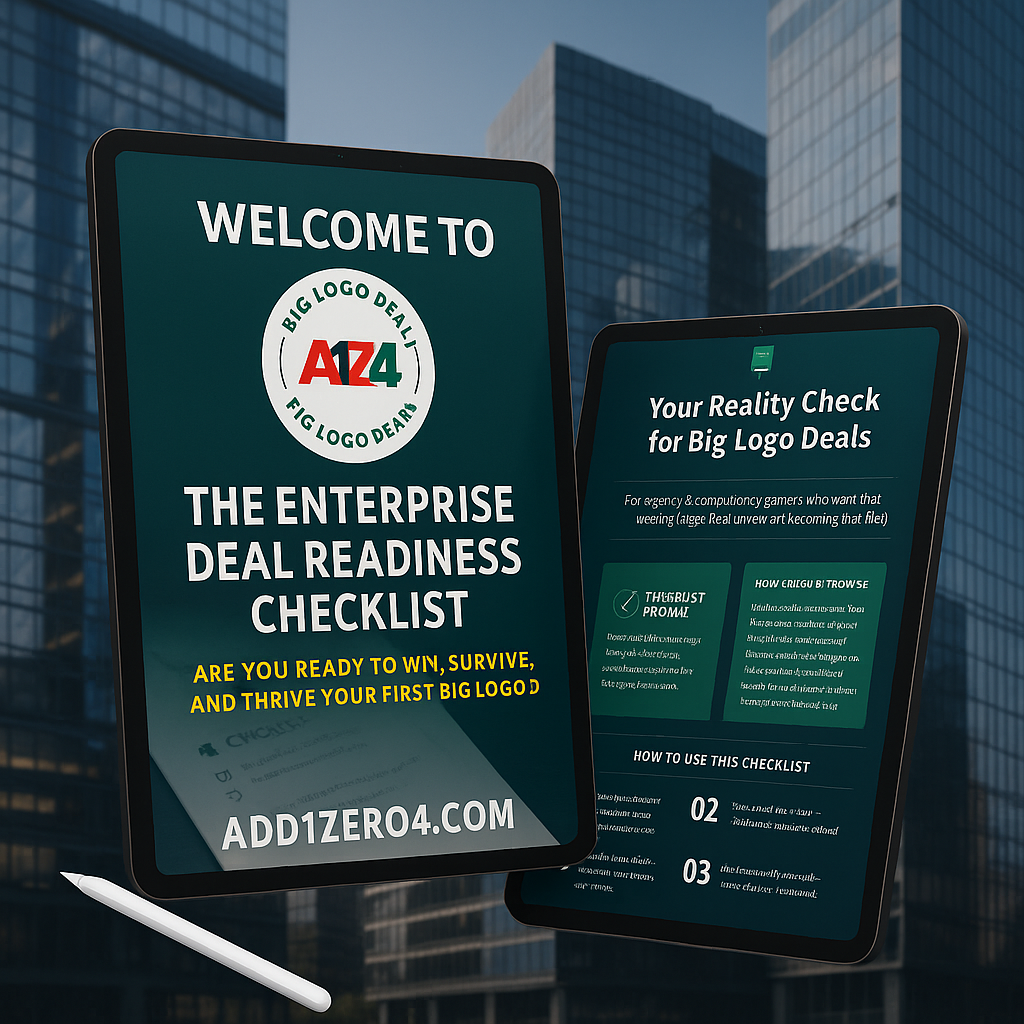
The Enterprise Deal Readiness Checklist
Skip the $100K+ learning curve. This insider’s checklist reveals if your B2B agency can win (and survive) Fortune 500 deals before you risk your stable revenue and best people chasing logos you’re not ready for.
Looking the Part: First Impressions in the Enterprise Sales Cycle
Before you even get a sniff of an enterprise deal, you need to look like you belong there.
- Your Website & Values: That quirky “About Us” page that charms SMBs? Enterprise clients might interpret “we value fun over work” differently. Your online presence, especially your website and LinkedIn, needs to scream credibility and professionalism. If it looks shabby or outdated because “all our business comes from referrals,” you’ll be dismissed instantly.
- Lead Funnels: Aggressive, long-form direct response funnels that work for SMBs will get an eye-roll from a corporate buyer. They expect accessibility on their terms. Consider an “Appointment-Focused Funnel” – make your homepage a clear path to booking a call. Simple, direct, and professional.
- Video Call Prowess: When you do get that call, nail it. Keep your power (don’t say “I’m just a sales guy”), get their story first (even if you’ve researched them), and master active listening for video – lean in, nod, and yes, even smile an uncomfortable amount. It’s all amplified on camera.
Remember, enterprise clients are looking for partners who can handle their scale and complexity. Your initial interactions set that tone. If you’re keen on diving deeper into how your agency can project this level of professionalism, the Big Logo Deals podcast often shares insights on positioning and first impressions.
The Mindset Game: Calm Confidence in a Long Cycle
The enterprise sales cycle is a marathon, not a sprint. Your attitude is everything.
- Feigned Indifference (aka Calm Confidence): Nobody likes a “thirsty” salesperson. Cultivate a mindset that you genuinely don’t need this specific deal. You’re there to be helpful and provide the best information. Of course, you care – it’s your revenue! But don’t let that desperation show. This isn’t about being aloof; it’s about broadcasting, “We’re the best solution, and you’ll come to realize that.”
- Become Their Advocate: Often, your internal contact needs to sell you to their boss. That’s a tough ask for a non-expert. Offer to help them. Say, “I know you need to pitch this internally. How about we set up a call where I can help you make the case to your leadership?” You’re making them look good.
- Know Your Walk-Away: Enterprise buyers will ask for discounts. Don’t just cave. Understand your Cost of Goods Sold (COGS) and your gross margin. What’s your absolute floor? If a deal dips below that, even for a massive logo, be prepared to walk. Integrity in your pricing and business health matters more than a single logo.
This “Calm Confidence” isn’t just a sales tactic; it’s a core philosophy. It means knowing your value, understanding your numbers, and being willing to say “no” when a deal isn’t right.
Our Probably-Too-Honest Private Podcast
Find out what REALLY happens when agencies land enterprise deals (spoiler warning: one of them lost $100K)
Brought to you by Add1Zero4 and hosted by David “Ledge” Ledgerwood
Financial X-Ray: Can Your Agency Survive the Win?
This is where many agencies get into hot water. Landing a big logo is exhilarating, but massive deals can kill companies faster than no deals if you’re not financially prepared.
- Cash is King (and Queen, and the Entire Royal Court): Enterprise clients often have long payment terms (Net 60, Net 90, or worse). You’ll be paying your team and covering expenses long before their cash hits your bank. Rule of thumb: Have at least half of the first six months’ contract value in unallocated cash before the deal starts. If not, you risk insolvency. Seriously.
- COGS Clarity: You must know what it costs you to deliver. This isn’t just salaries; it’s founder time, overhead, software, everything. Enterprise clients will want unbundled pricing, not your neat SMB packages. If you don’t know your COGS for each component, you’ll underprice and destroy your margins.
- The Ripple Effect: That huge new client? They’ll likely consume 50% (or more) of your best people’s time. What happens to your existing SMB clients who are currently paying the bills? Be upfront with them. Tell them you’ve landed a big fish and have an escalation path (we call it the “Bat Phone”) if they feel service is slipping.
Being truly ready for enterprise clients means having your financial house in impeccable order. The Enterprise Deal Readiness Checklist is a fantastic resource to start assessing if your agency has the financial and operational backbone for these larger engagements.
Operational Overhaul: Processes Will Break (and That’s Okay)
Your well-oiled SMB machine? Expect enterprise clients to throw a wrench in it.
- Goodbye, Standardization (Mostly): They don’t want your standard packages. They want custom solutions tailored to their massive, unique needs. You’ll use your experience from SMBs, but the delivery mechanism will change.
- Communication Overload: Expect more meetings, more reports, more check-ins. You’ll need to be hyper-focused on progress tracking and communication in ways you never imagined. Their internal approval layers can slow things to a crawl. We’ve seen projects take nine months just to choose a name and music for a media project due to internal approvals in Germany!
- Sales Enablement for the Big Leagues: Your sales team needs materials that speak to enterprise concerns – ROI, case studies (even if anonymized initially), and clear, concise demonstrations of value. Think simple, easily digestible pieces, not massive, over-designed decks. Build a library of these “middle-of-funnel” assets.
- Scope Creep is Guaranteed: Enterprise clients will ask for more. Train your team to identify scope creep and artfully escalate. “Favors” don’t build goodwill like they do with SMBs; they just set new, unpaid expectations.
This isn’t about throwing out everything that made you successful. It’s about building a new, more robust operational layer specifically for enterprise-level service.
The Big Logo Deals Course
Created by experts who have closed over $50 million in revenue over the last decade who teach you everything they know about closing deals with the logos you wish were on your client list.
Pricing, Packaging, and Procurement Puzzles
How you price and package your services, and how you navigate their procurement, is a critical part of the enterprise sales cycle.
- “Twice the Price, Half the Deliverables”: This isn’t a joke. Enterprise clients require significantly more overhead – more meetings, more revisions, more hand-holding. Your pricing must reflect this. If your SMB retainer is $5k/month, a starting point for enterprise might be $10k/month for less raw output.
- Proposals are for Closing, Not Selling: By the time you send a proposal, they should already be sold on why you. Keep proposals simple (Google Docs work great), focused on scope, deliverables, and costing. Everyone scrolls to the price page first anyway.
- The Paperwork Gauntlet: Get ready for MSAs (Master Service Agreements), SOWs (Statements of Work), POs (Purchase Orders), and vendor portals (SAP Ariba, Coupa, etc.). Each company has its own, often clunky, system. Your sales team needs to gather this info early, and your finance team needs to be looped in.
- Legal Landmines:
- NDAs: Mostly boilerplate, but watch for non-competes or overly broad exclusivity clauses that could hamstring your agency.
- Publicity Clauses: Make sure you can use their logo in your marketing! This is a huge part of the value of landing a big logo. Negotiate this.
- Insurance: They’ll ask for high coverage amounts and types you don’t need. Push back and get this tailored to what’s reasonable for your services.
This stage is where patience and meticulous attention to detail pay off. Rushing or glossing over these elements can cost you the deal or, worse, land you in a very unprofitable engagement.
The Long Wait: Patience, Follow-Up, and Defining “Closed”
The final, and often most frustrating, part of the enterprise sales cycle is the waiting game.
- Constellation Decision-Making Revisited: Remember those 8-10 stakeholders? They all need to align. This takes time. Lots of time. Your excited advocate contact might have no real power to push it through quickly.
- Polite Persistence in Follow-Up: Don’t be a pest, but don’t disappear. Your job is to follow up until you have an answer. Use a cadence of emails, connect on LinkedIn, and selectively use text if you’ve built that rapport. Always aim to add value.
- A Verbal Means NOTHING: This is a hard lesson many learn (myself included, cue embarrassing champagne story). An email saying “Great, let’s do it!” is a positive sign, nothing more. Don’t celebrate, don’t hire, don’t make major business decisions until the contract is signed and a PO is issued.
- When is it Actually Closed? When the agreement is signed, POs are issued, and you know you can bill them. Sometimes it means navigating their procurement portal successfully. Until then, you’re still selling.
Losing deals is part of the game, especially with enterprises. Learn from each one. Maybe it had nothing to do with you; priorities change internally at large companies all the time. That’s why a healthy pipeline and that “Calm Confidence” are so crucial.
Ready to Play in the Big Leagues?
Navigating the enterprise sales cycle is a demanding journey. It requires a shift in mindset, a strengthening of your financial and operational core, and a whole lot of patience. But the rewards – transformative growth, marquee clients, and industry leadership – are well worth the effort.
If you’re serious about adding zeros to your revenue by landing those big logo deals, it’s about more than just wanting it; it’s about systematically preparing for it. It’s about understanding the intricacies of how these giants operate and positioning your agency to not just win, but to thrive.
Feeling a bit overwhelmed but also fired up? That’s normal. This is a big leap. If you’re ready to get the detailed playbook, the mindset shifts, and the actionable tactics to consistently land enterprise clients, then explore the Big Logo Deals course. It’s designed by people who’ve been in your shoes and successfully made the jump, repeatedly.
Now go out there, embrace the challenge, and start landing those deals that will redefine your agency’s future.