
Ever find yourself staring at the logos of huge, enterprise companies – the Metas, the AWSs, the General Dynamics of the world – and wondering, “How do we get a piece of that action?” You’ve built a successful B2B services agency, you’re a rockstar with SMBs, but those big fish? They seem to swim in entirely different, much deeper waters. Your current b2b inside sales playbook, the one that’s worked wonders so far, might just be bouncing off their enterprise-grade hulls.
Big Logo Deals
Learn how to close your first big enterprise deal and drive massive business growth.
The truth is, landing those “big logo deals” isn’t just about scaling up your current efforts. It’s about a fundamental shift in mindset, approach, and operational readiness. These giants don’t just operate differently; they think differently. If you’re trying to woo them with SMB tactics, you’re likely missing the mark, and frankly, probably sounding a bit “thirsty,” as we say.
But here’s the good news: cracking the enterprise code is learnable. It’s about understanding their world, speaking their language, and preparing your agency to play in the big leagues. Let’s dive into some of the secrets that can transform your b2b inside sales efforts from SMB-focused to enterprise-ready.
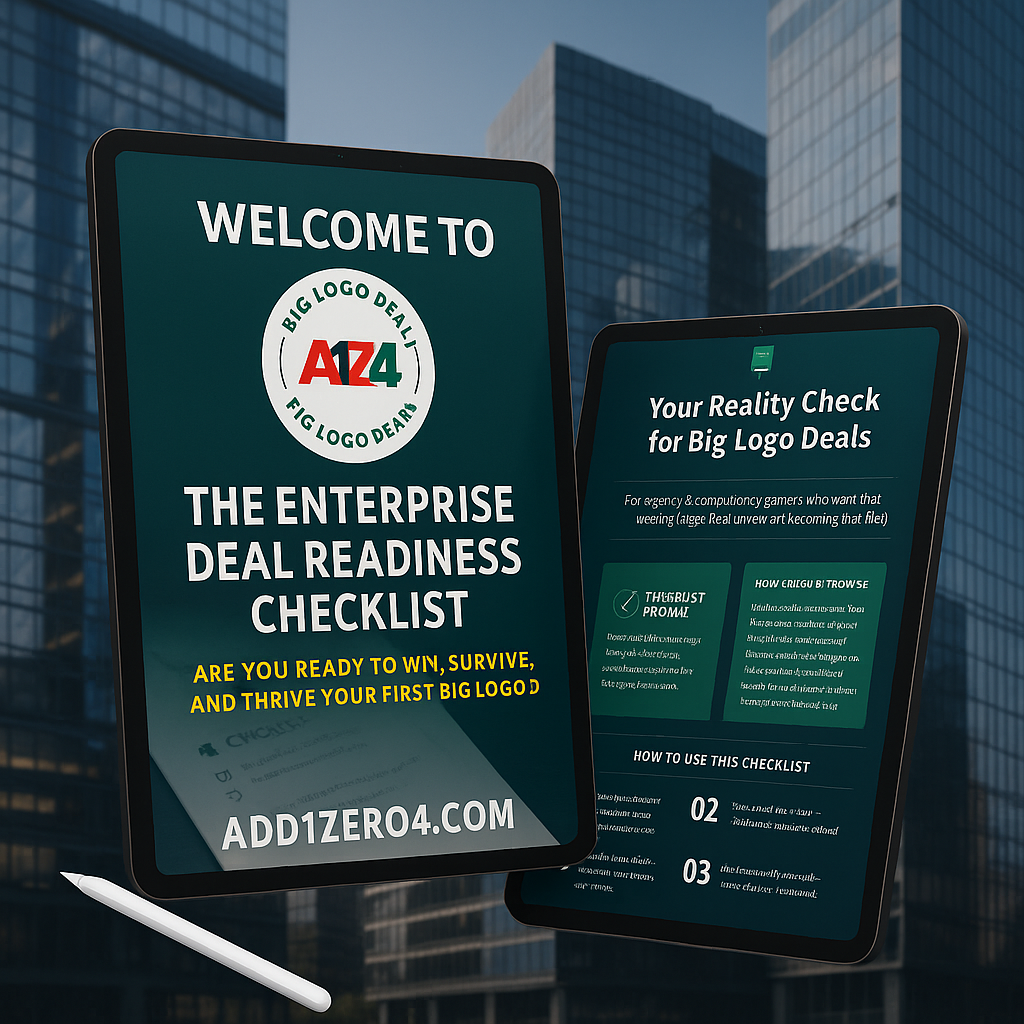
The Enterprise Deal Readiness Checklist
Skip the $100K+ learning curve. This insider’s checklist reveals if your B2B agency can win (and survive) Fortune 500 deals before you risk your stable revenue and best people chasing logos you’re not ready for.
The Enterprise Mindset Shift: It Starts With You
Before you even pick up the phone or draft that first email, the change needs to begin internally. Enterprise clients can smell desperation a mile away, and they’re looking for partners, not just vendors.
1. Beyond SMB Tactics: “Looking Legit” to the Big Leagues
- Your Website & Values: Does your website look like it can handle a multi-million dollar account? Is it clean, professional, and credible? Even your “About Us” page matters. If your core values scream “we value fun over work,” that’s cool for your internal culture, but be mindful of how a buttoned-up corporate buyer might perceive it. Simple is fine, but shabby is a dealbreaker.
- Initial Calls (Zoom-Era Professionalism): How you conduct your video calls speaks volumes.
- Keep Your Power: Don’t diminish yourself (“I’m just a sales guy”). For all they know, you’re a partner. Use “we” when talking about the company.
- Master Active Listening (Amplified): On video, you need to over-act a bit. Look into the camera (eye contact!), lean in, nod, and yes, even smile more than feels natural. It combats the sterile nature of screens.
- Hands and Face: Talking with your hands is fine, but be aware of your webcam frame. Avoid covering your mouth – it signals hiding.
- Screen Sharing Savvy: Remember, what they see is lower res and can lag. Scroll slowly, keep text large, and don’t click around like a maniac.
- Lead Funnels: That aggressive, highly-automated, long-form sales page funnel that works for SMBs? Enterprise folks will roll their eyes and close the tab. They expect accessibility on their terms. Consider an “Appointment-Focused Funnel” – make your homepage a direct path to booking a call, perhaps with a shortcut for known large company prospects.
2. Calm Confidence: The Antidote to “Sales Thirst”
This is huge. Say this out loud five times: “It makes no difference to my life if you buy this. It might make a difference to yours if you don’t.” That’s the core vibe.
It’s not about actually not caring (of course you care!), but about projecting that you’re the best solution and they need to arrive at that understanding themselves. You’re a helpful guide, not a desperate seller. This “feigned indifference” means you’re prepared to walk away because you know your numbers and your value. If you don’t believe there’s always another lead, you have a marketing problem, not a sales problem.
Navigating the Labyrinth: Understanding Enterprise Operations
Big companies are intricate ecosystems. Your b2b inside sales strategy needs to account for their unique structures and processes.
1. Who’s Who in the Zoo: The Stakeholder Constellation
SMB deals? Maybe 2-3 stakeholders. Enterprise? You could be juggling 8-10, appearing and disappearing over months. You don’t need advanced account mapping tools just yet, but be aware of common call types you’ll encounter:
- The Delegated Shopper: Often an intern or junior employee with a spreadsheet, trying to make an apples-to-apples comparison for their boss. You’ll likely have to play their game to get past them.
- The Unfunded Mandate: A frazzled mid-level person tasked with a vaguely defined project. They’re excited by solutions but have no real power. Your goal? Become their advocate and get a meeting with leadership.
- The Mid-Level Owner: Has some budget, “gets it,” but still needs to pitch up. This is often where deals get traction.
- The Chemistry Call: A screening to see if you’re a cultural and project fit before they let you get closer.
- The Leadership Presentation: Your shot with all the “right people.” Be ready to restate everything, as if they’re hearing it for the first time (they probably are, despite your advocate sharing materials).
2. The Budget Cycle Enigma & Payment Puzzles
SMBs often run on calendar years. Enterprises? Not so much. Their fiscal years can end in February, August, or whenever. Google “What is [Company X]’s fiscal year?” before you talk to them. Getting in ahead of their budget planning is a massive advantage.
Also, ask about budget approval levels. Some managers can expense $48k/quarter on their Amex, no questions asked. Others need procurement for a paperclip. Knowing this can help you find creative ways to start small engagements (like a $5k discovery on a corporate card) while the larger paperwork shuffles along.
3. Procurement & Legal: More Than Just a Handshake
Get ready for MSAs (Master Service Agreements), SOWs (Statements of Work), and POs (Purchase Orders). You’ll likely sign their paper, not yours. While you might not get many changes to their 60-page MSA, understanding what really matters is key.
- NDAs: Mostly boilerplate. Check the duration (2-3 years is normal), ensure it’s mutual, and watch for non-competes or exclusivity clauses that could hamstring your agency. Never sign a broad non-compete without serious consideration.
- Publicity Clauses: Can you use their logo in your marketing? This is a huge value. If the contract forbids it, push for “written approval” and understand that process. (Pro tip: many agencies use logos discreetly after successful projects without formal requests, but tread carefully).
- Insurance: They’ll have requirements. You likely need professional liability/E&O. Challenge unnecessary coverage types (like automobile liability if you’re fully remote) and overly high amounts.
- Supplier Portals: Be prepared to navigate often-clunky online systems (SAP Ariba, Coupa, etc.) for everything from submitting forms to requesting payment.
Our Probably-Too-Honest Private Podcast
Find out what REALLY happens when agencies land enterprise deals (spoiler warning: one of them lost $100K)
Brought to you by Add1Zero4 and hosted by David “Ledge” Ledgerwood
Revamping Your B2B Inside Sales Process for Big Wins
Your sales engine needs a serious enterprise-grade tune-up.
1. Pricing for Value (and Pain): “Twice the Price, Half the Deliverables”
This isn’t a joke. Why does it work?
- Overhead, Overhead, Overhead: Big clients demand a lot more attention – more meetings, more reports, more hand-holding. This isn’t billable time; it’s baked into your (higher) price. Remember the client who wanted a 65-slide deck reformatted into a Word document? That’s the kind of “frictional cost” you’re covering.
- No “Free Stuff”: Doing “favors” for SMBs builds goodwill. For enterprises, free work for one contact (who may not even be the decision-maker) often just sets an expectation for more free work. If you make a concession, document it clearly as a one-time thing with its actual value.
When they ask for a ballpark, if your SMB retainer is $5k/month, consider cutting the scope items in half and ballparking $10k/month for the enterprise. It’s a starting point.
2. Proposals That Actually Close Deals
Forget those beautifully designed, 50-page pitch decks. You should have sold your value during the sales calls.
- Simple is King: We’re huge fans of Google Docs. Open them for comments. Keep it focused. What do they look at first? Costing! Don’t bury it.
- Modular Content: Build a library of your core information (company details, team bios, service descriptions, case snippets). This makes customizing proposals faster.
- QA is Non-Negotiable: Build in time for internal reviews, proofreading, and number-checking. You will miss errors when you’re tired. A misplaced zero is a disaster.
3. Follow-Up Finesse in Marathon Sales Cycles
Enterprise decisions take time. Months can go by.
- Polite Persistence: It’s your job to follow up. Give them permission to tell you “no.” Humanize the interaction – people help people they like.
- Cadence and Channels: Use a follow-up email sequence. Connect on LinkedIn. If you got their mobile number (and you should try!), use text messaging selectively and politely.
- Know When to Fold ‘Em: You won’t win them all. If it’s been months of silence after consistent, value-added follow-ups, it might be time to let it go and focus on your pipeline. Learn from it and move on.
The Big Logo Deals Course
Created by experts who have closed over $50 million in revenue over the last decade who teach you everything they know about closing deals with the logos you wish were on your client list.
Are You Really Ready? The Internal Checkpoints
Landing a big logo is one thing. Delivering successfully without bankrupting your agency or burning out your team is another. Before you pop the champagne (and definitely don’t do that on a verbal “yes” – I learned that the hard way!), check your internal readiness.
Want to dive deeper into what it takes? The Enterprise Deal Readiness Checklist is a great place to start evaluating your agency’s preparedness.
- Financial Fortitude: Massive deals can kill companies faster than no deals. You need cash on hand. Assume you’ll need to float at least half the contract value for 6 months. Can your Accounts Receivable and balance sheet handle that?
- Operational Agility: Your current SMB processes will break. Enterprise clients have exacting standards and often demand custom workflows. Are you prepared to adapt?
- Team Impact: Your best people will be stretched thin. That amazing new logo still needs servicing alongside your existing (bill-paying) SMB clients. Talk to your team, plan for the strain, and consider how you’ll manage it.
The Long Game and Sweet Victory
Remember that story about buying champagne too early? A verbal “yes” means nothing until contracts are signed, POs are issued, and you know you can bill. The deal isn’t closed until it’s closed.
But when it is closed? Celebrate! And then, leverage that win. Every big logo you successfully serve makes the next one easier. You build proof, experience, and that invaluable “calm confidence” that comes from truly knowing your stuff in the enterprise arena. This journey is a marathon, not a sprint, but the rewards – both financial and in terms of your agency’s prestige – are immense.
Feeling overwhelmed but excited? That’s normal. This is a big leap. If you’re serious about adding a zero (or more!) to your agency’s revenue by landing these game-changing clients, you don’t have to figure it all out alone. The Big Logo Deals course is designed to give you the mindset, tactics, and execution framework to navigate this transition successfully. And for ongoing insights and stories from the trenches, check out the Big Logo Deals podcast.
Now, go out there, apply these secrets, and start landing those deals. You’ve got this.