
So, you run a B2B services agency – maybe in advertising, marketing, or design. You know the ropes. You’ve probably heard the classic distinctions: B2C is about emotion, B2B is about logic. B2C has short sales cycles, B2B takes longer. Simple, right? Well, mostly. But if you’re looking to graduate from serving primarily small to medium-sized businesses (SMBs) to landing those coveted “big logo” enterprise clients, you’re about to discover that “B2B” itself has vastly different flavors. Understanding how B2B and B2C marketing strategies differ is just the tip of the iceberg; the real game-changer is grasping how enterprise B2B operates on a completely different playing field than the SMB B2B world you might be used to.
Big Logo Deals
Learn how to close your first big enterprise deal and drive massive business growth.
Many agencies hit a wall here. What worked for your $5k/month retainers with nimble SMBs often falls flat when you’re trying to woo a multi-billion dollar corporation. It’s not just about scaling up your existing efforts; it’s about a fundamental shift in mindset, approach, and operational readiness. This article dives into those crucial differences, helping you understand the terrain so you can stop spinning your wheels and start closing deals that can truly transform your agency.
The B2B vs. B2C Basics: A Quick Flyby
Before we plunge into the enterprise deep end, let’s quickly touch on the generally accepted differences between B2B (Business-to-Business) and B2C (Business-to-Consumer) marketing:
- Audience: B2C targets individual consumers making personal purchasing decisions. B2B targets other businesses, often involving multiple stakeholders in a professional capacity.
- Decision-Making: B2C decisions are often driven by emotion, immediate need, or desire, and are relatively quick. B2B decisions are typically more rational, based on ROI, efficiency, and long-term value, involving a more complex and lengthy buying process.
- Sales Cycle: B2C sales cycles can be minutes or days. B2B sales cycles can span months, even years.
- Relationship: B2C relationships can be transactional. B2B often focuses on building long-term partnerships and trust.
- Content & Messaging: B2C content might be entertaining, benefit-driven for personal gain, and easily digestible. B2B content is often educational, data-driven, and focuses on solving business challenges and demonstrating expertise.
This is the 101. But if your agency is already in the B2B space serving SMBs, you might be thinking, “Yeah, I get this.” The shock comes when you realize that the B2B you know with SMBs can feel almost B2C-like in its directness compared to the labyrinthine world of enterprise B2B.
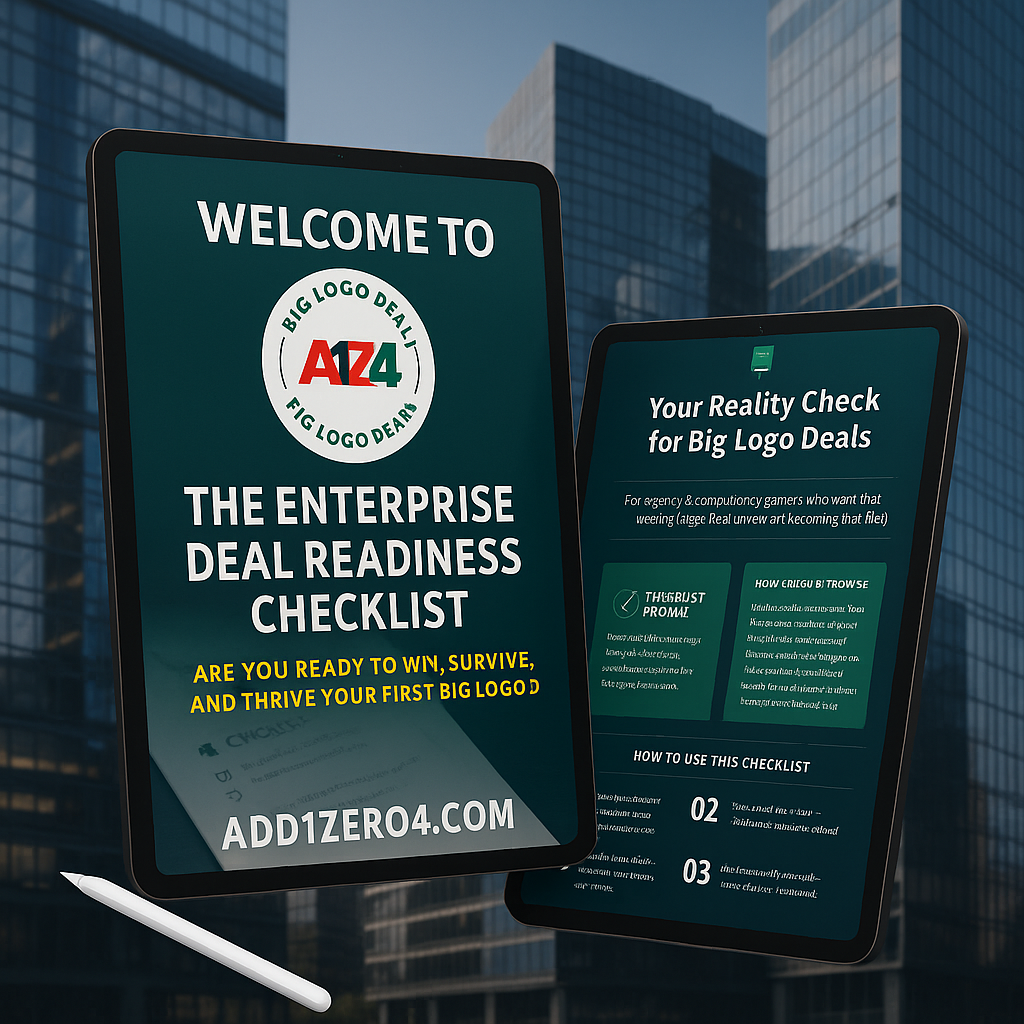
The Enterprise Deal Readiness Checklist
Skip the $100K+ learning curve. This insider’s checklist reveals if your B2B agency can win (and survive) Fortune 500 deals before you risk your stable revenue and best people chasing logos you’re not ready for.
The Real Chasm: SMB “B2B” vs. Enterprise “Big League” B2B
Here’s where many B2B service agencies stumble. They’re comfortable with their SMB clients. The owner or a small team makes the call, deals are relatively straightforward, and “procurement” might just be an invoice getting paid. It’s still B2B, but it’s a different beast entirely from trying to land a contract with a company like Siemens or Meta.
The pain point is real: agencies often lack the deep understanding of how these corporate giants operate. It’s not just a bigger version of an SMB; it’s a different ecosystem with its own rules, language, and expectations. This is precisely why so many agencies struggle to make the leap. They try to apply SMB tactics to enterprise targets and wonder why they’re not getting traction.
If you’re aiming for those game-changing enterprise deals, you need to understand their world from the inside out. Ready to peek behind the curtain? Let’s explore what it really takes, drawing from the kind of insights that can help you add a zero (or two!) to your deal sizes.
Cracking the Enterprise Code: What You Actually Need to Know
Transitioning to enterprise clients involves a seismic shift in almost every aspect of your agency. It’s not just about a better pitch deck; it’s about fundamentally re-engineering your approach.
1. Attitude & Deal Making: The Enterprise Tango
Forget the quick wins. Enterprise deal-making is a marathon, not a sprint, and requires a specific mindset.
- The Constellation of Decision-Makers: With SMBs, you might talk to one or two key people. In an enterprise, you’re often dealing with 8-10 (or more!) stakeholders, many of whom appear and disappear throughout the process. You’ll encounter “Delegated Shoppers” (often junior staff sent to gather info), “Unfunded Mandates” (mid-level folks tasked with something but no budget yet), “Mid-Level Owners” (your potential advocate with some budget but needs boss’s approval), “Chemistry Calls” (can we even work with these guys?), and finally, the “Leadership Presentation.” Your job is to navigate this web, and understanding who’s who in the enterprise sales cycle is your first mission.
- Calm Confidence, Not Thirsty Sales: Enterprise buyers can smell desperation a mile away. You need to project “Calm Confidence.” The vibe should be: “It makes no difference to my life if you buy this. It might make a difference to yours if you don’t.” Of course, you care, but they don’t need to see that. You’re there to offer the best solution, and they need to come to that understanding.
- Becoming Their Advocate: Often, your initial contact is a mid-level manager who needs to sell you internally. Don’t just send a proposal and hope for the best. Offer to help them make the case to their superiors. Position yourself as their partner in navigating internal hurdles.
- Mastering Budget Cycles & Levers: Enterprise budgets are complex and often don’t align with the calendar year. Ask about their fiscal year and budget submission deadlines. And when they ask for a discount (they will), don’t just cave. Think about what you can get in return: shorter payment terms, a longer commitment, a video testimonial, or preferred vendor status. Value for value.
2. Financial Readiness: Can Your Agency Handle the Win?
Landing a massive deal feels great, but it can bankrupt an unprepared agency. Seriously.
- The Cash Flow Crunch: Big companies often have long payment terms (Net 60, Net 90, or worse). You’ll likely need to pay your team and cover expenses long before you see a dime. A rule of thumb: assume you’ll need to float at least half the contract value for six months. If you don’t have that cash on hand or a solid credit line, you’re playing with fire. Many an agency has been sunk by a “dream client” whose payment processes are glacial.
- COGS for Grown-Ups: Your SMB Cost of Goods Sold (COGS) calculations might be a bit… loose. That won’t fly with enterprise deals. You need to know exactly what it costs to deliver, including often-forgotten founder time and the overhead of increased communication, project management, and QA that enterprise clients demand. They’ll want services unbundled, and if you don’t know your numbers, your margins will evaporate.
- Metrics That Truly Matter: Enterprise clients, especially their leadership, are hyper-focused on ROI. While your direct contact might talk about “brand awareness,” their boss will be asking about revenue impact. Research what KPIs are critical in their industry and for their leadership. You need to build your case around these, not just “soft” metrics. Getting great testimonials with real ROI figures is gold.
3. Operational Readiness: Looking and Acting the Part
Enterprise clients expect a higher level of professionalism and preparedness across the board.
- Looking Legit: That outdated website and reliance on referrals? It won’t cut it. To move beyond referrals, you need to look the part. Enterprise clients will scrutinize your online presence. It needs to look credible and professional. Your lead funnels also need an upgrade. Ditch the aggressive, automated SMB funnels. Enterprise buyers expect accessibility on their terms; an “Appointment-Focused Funnel” often works best. Even your Zoom call etiquette matters – good lighting, clear audio, active listening, and no filler words.
- Enterprise-Level Standards: Communication, delivery, and reporting expectations are sky-high. They move slowly on approvals but may demand quick turnarounds on work. You’ll need to be agile, communicate constantly, and reconfirm everything. Your existing processes will break. Be prepared to create new ones tailored to their needs.
- Sales Enablement is Key: This isn’t just top-of-funnel content. It’s “middle-of-funnel” material – case studies, detailed process flows, ROI calculators – that your sales team uses to demonstrate expertise and value during sales calls. Keep it simple, low-design, and focused on numbers. Build a library of these modular pieces.
Our Probably-Too-Honest Private Podcast
Find out what REALLY happens when agencies land enterprise deals (spoiler warning: one of them lost $100K)
Brought to you by Add1Zero4 and hosted by David “Ledge” Ledgerwood
4. Pricing & Packaging: It’s Not SMB-Plus
Your standard SMB packages and pricing? They’re probably irrelevant.
- “Twice the Price, Half the Deliverables”: This is a useful starting point. Enterprise clients demand significantly more overhead (meetings, reports, hand-holding). So, if your SMB retainer is $5k/month, consider ballparking an enterprise equivalent at $10k/month for roughly half the core deliverables, with the rest of the value being the increased attention and customization.
- No More “Freebies”: Doing favors for SMB clients often builds goodwill. With large companies, “free work” usually just sets an expectation for more free work. Any concessions should be explicitly documented and tied to future paid engagement or a clear value exchange.
- Navigating RFPs, SOWs, and POs: Requests for Proposals (RFPs) can be time-sinks, often written by non-experts asking the wrong questions. Be selective. When you do create proposals, you need to understand the anatomy of a winning enterprise proposal; keep them simple, focused on costing (they’ll scroll to it anyway), and be prepared to reformat them into Word for their redlining. Statements of Work (SOWs) and Purchase Orders (POs) are your lifeblood; master their intricacies.
5. Legal & Procurement: The Necessary Hurdles
This is where many deals slow down or die.
- Legal Counsel (the Smart Way): You’ll be signing their lengthy, complex Master Service Agreements (MSAs). Get legal counsel, but use them to understand what matters and the real risks, not just to redline every clause (which they won’t change anyway). Focus on publicity clauses (can you use their logo?), IP ownership, and genuinely harmful non-competes.
- NDA Pitfalls: Non-Disclosure Agreements are standard. Ensure they’re mutual, have reasonable time limits, and don’t sneak in non-competes or exclusivity clauses that could cripple your agency’s ability to work with others in that industry.
- Procurement Portals & Paperwork: Get ready for vendor portals, security audits, and endless forms. It’s a frictional cost. Keep meticulous records. You’ll need W-9s, banking info, insurance certificates (they’ll ask for high coverage; negotiate what’s reasonable for your service type), and details about your D&I policies.
6. Patience & Timing: The Long Game
This isn’t for the impatient.
- Constellation Decision-Making (Again): It bears repeating. Decisions involve many people, agendas, and often, internal politics. It will seem objectively stupid sometimes.
- The Art of Following Up: Prospects will go dark for months. Polite persistence is key. Use a mix of email, LinkedIn, and even selective, polite texting (if you have their mobile). Don’t be annoying, add value. Sometimes, you just have to let a dead deal go. Learn from it, avoid the common mistakes that lead to B2B sales cycle sabotage, and move on.
- When is a Deal Actually Closed?: A verbal “yes” means nothing. Don’t pop the champagne (true story, learned that the hard way!). A deal is typically “closed-won” when agreements are signed, and a PO is issued – basically, when you know you can bill it. Until then, you’re still selling.
The Big Logo Deals Course
Created by experts who have closed over $50 million in revenue over the last decade who teach you everything they know about closing deals with the logos you wish were on your client list.
Are You Ready to Make the Leap?
Phew. That’s a lot, right? Landing big logo deals is a significant undertaking. It requires more than just ambition; it demands a deep understanding of this unique landscape and a willingness to adapt your agency from the ground up.
Ask yourself:
- Is my team (and my mindset) ready for this level of complexity?
- Are our finances robust enough to weather long payment cycles and the investment needed to deliver?
- Do our current processes and marketing reflect the sophistication enterprise clients expect?
If you’re feeling a little overwhelmed, that’s normal. The good news is that you don’t have to figure this all out on your own. A great first step is to see where your agency currently stands. Our Enterprise Deal Readiness Checklist can help you identify your strengths and weaknesses.
Paving Your Path to Big Logo Deals
Understanding how B2B and B2C marketing strategies differ is fundamental, but recognizing the profound distinctions within B2B itself—especially when targeting enterprise clients—is what separates agencies that stay small from those that land transformative deals. It’s about more than just different marketing tactics; it’s about a different operational reality.
The journey from SMB-focused to enterprise-ready is challenging but incredibly rewarding. It involves mastering new skills in deal-making, financial planning, operational delivery, legal navigation, and sheer patience.
If you’re serious about making this leap and want a proven roadmap from those who’ve successfully navigated this path for themselves and countless agencies, then the Big Logo Deals course is designed specifically for you. It’s packed with the mindset, tactics, and execution frameworks needed to close and thrive with your first—and subsequent—major enterprise clients.
Want to hear more real-world stories and insights from the trenches of enterprise sales? Tune into the Big Logo Deals podcast for ongoing inspiration and practical advice.
The Takeaway: It’s a Different World, Be Prepared
The leap from servicing SMBs to courting enterprise giants is less about a gradual incline and more like stepping into a different dimension. The B2B principles you know still apply, but they are magnified, twisted, and layered with complexities you may not have encountered before. Success hinges on understanding these nuances and preparing your agency—operationally, financially, and mentally—for the challenge.
The rewards, however, can be immense: higher margins, game-changing revenue, and the kind of prestige that attracts even more big logos. The path is there, but it demands diligence, the right knowledge, and a healthy dose of calm confidence. Now, go out there and get ready to land those big fish!