
So, you’re running a B2B services agency – maybe in advertising, marketing, design, or development. You’ve built something awesome. You’ve got a solid roster of SMB clients, you’re delivering great work, and things are… good. But “good” isn’t “game-changing,” is it? You’ve seen those big, household-name logos on competitor websites and thought, “How do they do it? How do we get a piece of that action?”
Big Logo Deals
Learn how to close your first big enterprise deal and drive massive business growth.
If you’re wondering how to grow a B2B agency into the next league, landing those “big logo” enterprise clients is often the dream. The prestige, the larger budgets, the potential for massive growth – it’s all incredibly alluring. But here’s the kicker: the leap from SMBs to enterprise giants is more like a canyon jump than a simple step up. These behemoths operate on a completely different planet, and what worked with your beloved SMB clients can fall flat, or worse, make you look amateur.
The truth is, many agency owners hit a wall. They’re masters of their craft, but navigating the complex, often bewildering, world of enterprise sales, operations, and expectations? That’s a whole new skillset. You’re not just selling services; you’re selling to a complex ecosystem of decision-makers, budget cycles, and procurement processes that can feel like an ancient, inscrutable ritual.
But here’s the good news: it’s a code that can be cracked. It requires a shift in mindset, a bolstering of your processes, and a new understanding of “value.” Ready to learn how to transform your agency and start playing in the big leagues? Let’s dive in.
The Enterprise Enigma: Why Big Companies Are a Different Beast
Before we get into the “how,” let’s understand the “why.” Why are enterprise clients so different?
SMB deals often involve a handful of stakeholders, maybe even just the founder. Decisions can be quick, processes are lean, and you’re often competing against inertia or a couple of other local players. Enterprise deals? Think more layers than a wedding cake. You could be juggling 8-10 stakeholders (some of whom appear and disappear like phantoms), dealing with near-zero urgency tied to rigid budget cycles, and facing off against established, global competitors.
They’re not just bigger; their internal workings are fundamentally different. Their risk tolerance is lower, their demand for proof is higher, and their definition of “professionalism” is often far more stringent. This isn’t to scare you, but to prepare you. Understanding this difference is the first step in equipping your agency for success.
The Enterprise Deal Readiness Checklist
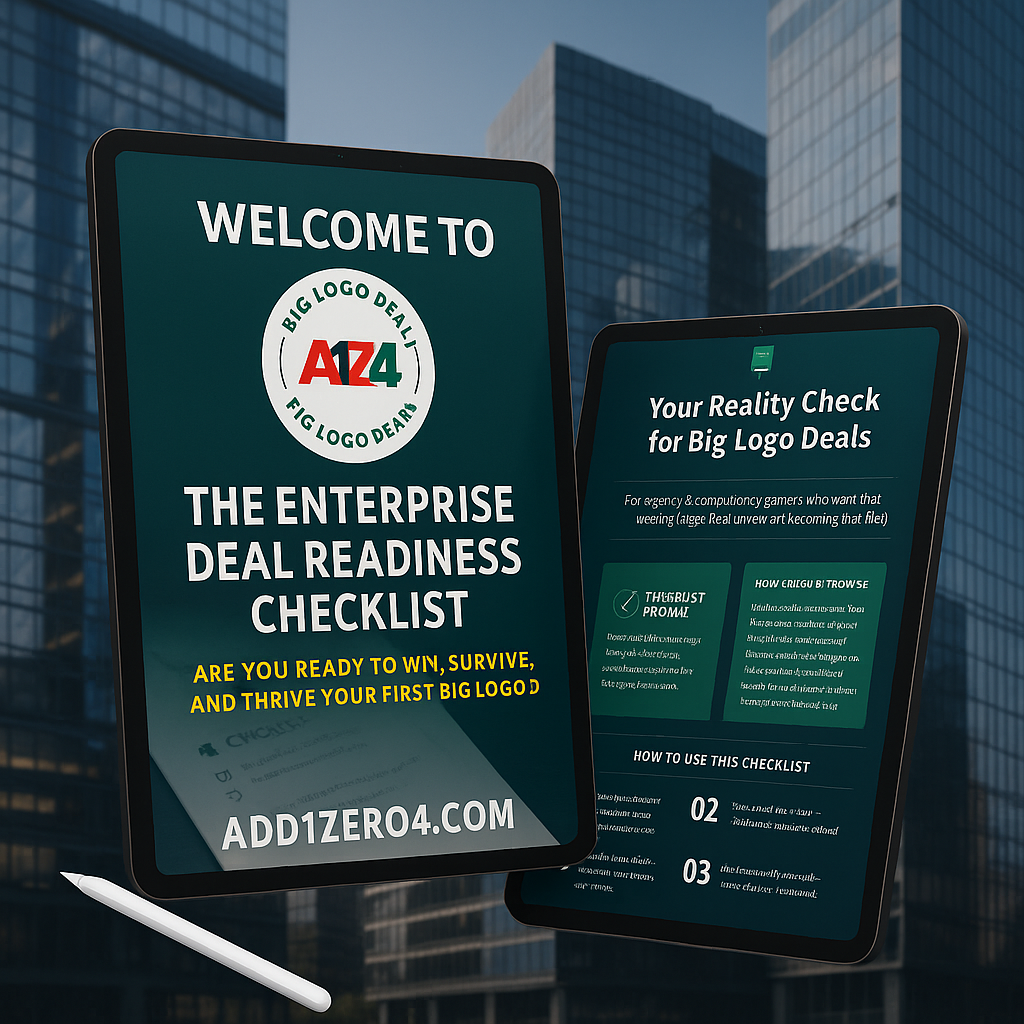
Skip the $100K+ learning curve. This insider’s checklist reveals if your B2B agency can win (and survive) Fortune 500 deals before you risk your stable revenue and best people chasing logos you’re not ready for.
Shifting Your Mindset & Approach: It Starts with “Calm Confidence”
Landing big logo deals isn’t just about a better sales pitch; it’s about a fundamental shift in your agency’s attitude and deal-making strategy.
1. Looking Legit: More Than Just a Pretty Website
Your website and marketing materials, which might have been “good enough” for referrals and SMBs, now need to scream credibility. Big companies will scrutinize your online presence.
- Core Values: Be mindful of how your company values are presented. If your “About Us” page screams “fun over work,” it might not resonate with a corporate buyer looking for a dead-serious partner for a multi-million dollar project. It’s fine to have those internal values, but consider what you lead with externally.
- Website Polish: “We get all our business from referrals” is no longer an excuse for an outdated site. Enterprise clients use Google too. Your site needs to be tight, professional, and instill confidence that you can handle their scale. Simple is fine, but shabby is a deal-breaker.
- Lead Funnels: Those high-pressure, automated funnels that work for SMBs? They’ll get an eye-roll from enterprise prospects. They expect accessibility on their terms. Consider an appointment-focused funnel that prioritizes getting a conversation booked.
2. Mastering the Call: From Delegated Shoppers to Leadership Presentations
Not all calls are created equal. You’ll encounter various personas:
- The Delegated Shopper: Often an intern or junior employee tasked with filling a spreadsheet. Give them what they need, but know this is a long game.
- The Unfunded Mandate: A frazzled mid-level employee who needs a solution but has no budget. Your goal: become their advocate and get to their boss.
- The Mid-Level Owner: Has some budget, “gets it,” but still needs to sell you upwards. This is often where the magic happens.
- The Chemistry Call: A screening to see if you’re a cultural and project fit before they invest more time.
- The Leadership Presentation: Your shot with all the “right people.” Be prepared to re-state everything.
Your poise and ability to adapt your communication style to each of these are critical. And remember, researching your prospects on LinkedIn beforehand isn’t optional; it’s essential.
3. “Calm Confidence” (aka Feigned Indifference):
This is the secret sauce. Enterprise buyers can smell desperation a mile away. You need to project an aura that says, “It makes no difference to my life if you buy this. It might make a difference to yours if you don’t.” Of course, you care! But that’s your motivation, not theirs. Focus on being helpful and informative, not pushy.
- Practice Asking for More Zeros: If you’re used to $5k deals, saying “$100,000” with a straight face takes practice. Do it.
- Be Prepared to Walk: Know your numbers, your value, and your walk-away point. There will always be another lead (if not, that’s a marketing problem, not a sales problem).
4. Deal-Making Levers: Beyond Just Discounting
A savvy buyer will always ask for a discount. Don’t just cave. Think trade-offs:
- Payment Timing: Can they pay upfront for a discount? Shorter net terms?
- Length of Commitment: A longer contract in exchange for a rate break?
- Removing Onerous Clauses: Can they ease up on extreme insurance requirements or provide a video testimonial?
- Preferred Vendor Status: Explore what it takes to become a long-term, preferred partner.
5. Developing Thick Skin:
You’ll encounter prickly personalities and frustrating bureaucracy. Don’t take it personally. Stay focused on collaboration, understand their motivations, and remember it’s okay to politely push back and set boundaries. You’re a partner, not just a vendor.
Our Probably-Too-Honest Private Podcast
Find out what REALLY happens when agencies land enterprise deals (spoiler warning: one of them lost $100K)
Brought to you by Add1Zero4 and hosted by David “Ledge” Ledgerwood
Are You Financially Ready for the Big Leagues?
Here’s a hard truth: massive deals can kill companies faster than no deals. The financial leap is significant.
- Cash Flow is King (and Queen, and the Entire Royal Court): Enterprise clients often have long payment cycles (Net 60, Net 90, or worse). You’ll likely pay your team and incur project costs long before you see a dime. A rule of thumb: have at least half the first six months’ contract value in unallocated cash before the deal starts. Otherwise, you risk insolvency.
- COGS (Cost of Goods Sold) Clarity: Gut-check COGS doesn’t cut it. You need to know exactly what it costs to deliver every service, including often-forgotten founder time. Enterprise clients will want to unbundle your packages; if you don’t know your COGS per component, you’ll destroy your margins. And remember, 40 hours/week utilization is a fantasy; account for switching time and non-billable activities.
- Metrics That Matter (to Them): Enterprise clients are hyper-focused on ROI. Even if your direct contact talks about “brand awareness,” their boss (who signs the checks) cares about hard numbers. Understand their KPIs and how they’re measured. Your ability to demonstrate concrete ROI will be crucial for renewals and upsells.
- Accounts Receivable (AR) is a Battleground: Don’t be lazy with invoicing. Net terms start when the invoice is received. Be prepared to chase payments relentlessly. Each enterprise has its own (often awful) vendor portal and payment process. You have to own this.
- Scaling Up – Can You Afford the Strain?: Analyze your current client health and revenue concentration. No single client should represent more than 20% of your revenue. Can your existing team handle a 50% workload increase from a new enterprise client while maintaining service levels for current SMBs? Be honest.
Gearing Up Your Operations: Professionalism is Non-Negotiable
Winning the deal is one thing; delivering successfully is another. Your operations need to be enterprise-ready.
- Show Up as The Expert (Every Time): Enterprise clients expect you to have done your homework. Read their annual reports, press releases, industry trends, and social media. Record your sales calls (tools like Fathom are great) and make these recordings available to your delivery team. Everyone on your team who interacts with the client needs to be prepared and sound like they do this every day.
- Sales Enablement That Works: This isn’t just top-of-funnel content. It’s “middle-of-funnel” material – case studies, process flowcharts, ROI calculators – that your sales team uses to demonstrate expertise and 1:1 value. Keep it simple, low-design, easy to consume, and focused on numbers. Build a modular library of these assets.
- Enterprise Customer Standards are Different: What worked for SMBs (standard packages, informal communication) won’t fly.
- Communication: Communicate early, often, and reconfirm everything. Expect slower movement but be ready for sudden urgency. Navigate multiple stakeholders and shifting priorities.
- Delivery: Be prepared for your processes to break. Enterprise projects will challenge your scope management. Track progress meticulously.
- Reporting: Find out their preferred reporting format (slides, docs, BI dashboards) and deliver it. Be agile. If they want your 65-slide deck as a Word document, you sigh and do it.
- Your Existing Accounts Will Take a Hit (Initially): Your best people will be stretched thin. Be transparent with your SMB clients. Explain the situation, provide clear escalation paths (“the Bat Phone”), and reassure them they’re still valued.
Pricing & Packaging for Giants: It’s Not SMB Plus a Zero
Your carefully crafted SMB packages? They’re probably irrelevant to an enterprise client.
- “Twice the Price, Half the Deliverables” Revisited: This isn’t just a flippant remark. It’s a starting point. Why?
- Overhead, Overhead, Overhead: Enterprise clients demand significantly more attention – more meetings, more reports, more hand-holding. This “invisible” work needs to be priced in.
- Customization is Key: They don’t want your standard package. They want a bespoke solution.
- Avoiding “Free Stuff”: Doing favors for SMBs builds goodwill. Doing free work for enterprise clients often just sets an expectation for more free work. If you do offer something extra, be explicit that it’s a one-time concession and document it clearly (e.g., show it as a line item with a 100% discount on the invoice).
- Flexible Payment Cadences & Structures:
- Payment Terms: Net 30, 60, 90 – it’s all negotiable. Push for shorter terms or upfront payments, especially if their standard terms are brutal.
- Structures:
- Upfront: Ideal, but rare.
- Milestone Billing: Common and good for cash flow. Structure these to mimic MRR if possible.
- Post-Delivery/Proof-of-Delivery: Avoid if possible. All the risk is on you.
- Retainers: Can work for high-end consulting but are less common for project work with new enterprise vendors.
- SOWs, POs, Portals, Oh My! Get ready for paperwork. Master Service Agreements (MSAs), Statements of Work (SOWs), Purchase Orders (POs) – each company has its own templates and processes. You’ll likely spend a lot of time in clunky supplier portals. Track everything meticulously.
The Big Logo Deals Course
Created by experts who have closed over $50 million in revenue over the last decade who teach you everything they know about closing deals with the logos you wish were on your client list.
Navigating the Corporate Maze: Legal, Procurement, Patience & Timing
This is where many agencies get bogged down.
- Legal Counsel is Your Friend (But Use Them Wisely):
- Have a lawyer review your standard contracts.
- For enterprise MSAs (which you’ll likely have to sign their version of), understand that extensive redlining can stall deals for months. Focus on learning what actually matters – publicity clauses (can you use their logo?), IP ownership, and truly deal-breaking liability.
- NDA Pitfalls: Most NDAs are boilerplate. Watch for overreach: non-competes that cripple your ability to work with others in the industry, or unreasonable exclusivity clauses.
- Contract Language Gotchas:
- Publicity/Logo Use: Can you use their logo in your marketing? Get it in writing if possible. The value of a big logo is significantly diminished if you can’t showcase it.
- Insurance: They’ll have requirements. Some will be overkill (e.g., auto liability if you’re fully remote). Push back reasonably. Ensure you have adequate professional liability/E&O insurance.
- Data Security/IT Audits: Be prepared for these. Using major cloud providers for your data can help, as they often have robust security certifications you can point to.
- Procurement is a Process, Not an Event: Expect back-and-forth. Your contact can help you understand what to expect. Keep detailed records of all forms and communications.
- Patience & Timing: The Long Game
- Constellation Decision-Making: Decisions involve many people, many agendas, and often, many delays. What seems like a “yes” from your contact might be just the first step in a long internal approval chain.
- Whose Word Matters?: Understand who your internal advocate is versus who the actual decision-maker with budget authority is.
- Following Up When They Go Dark: Polite persistence is key. Use a follow-up cadence. Connect on LinkedIn. Use text sparingly and professionally if you have their mobile.
- Defining the “Close”: A verbal “yes” means nothing. A deal is closed when agreements are signed, POs are issued, and you know you can bill. Don’t celebrate (or hire) prematurely. Loose lips sink ships.
Ready to Add a Zero (or Two) to Your Deals?
Transitioning from SMB success to landing big logo enterprise clients is a marathon, not a sprint. It demands a new level of professionalism, financial astuteness, operational rigor, and a heaping dose of patience. The learning curve is steep, and the stakes are high. But the rewards – transformative growth, industry recognition, and the thrill of working with iconic brands – can redefine your agency’s future.
If you’re serious about making this leap and want a proven roadmap from someone who’s closed nearly $50M in B2B deals (with an 80% close rate with $1B+ companies in 2022), then it’s time to get equipped.
- Stop guessing and start strategizing. Learn the mindset, tactics, and execution necessary to close your first BIG enterprise logo with the Big Logo Deals course.
- Wondering if your agency is even ready to play in the enterprise space? Download the free Enterprise Deal Readiness Checklist to assess your current state.
- Want to hear more real-world insights and strategies for landing bigger clients? Tune into the Big Logo Deals podcast.
The enterprise world might seem daunting, but with the right knowledge and preparation, you can stop dreaming about those big logos and start making them your clients. Now go out there and make it happen!