
So, you’ve built a respectable PPC agency. Your team’s sharp, clients are seeing results, and you’ve carved out a nice niche. But let’s be honest, are you hitting a bit of a ceiling? Maybe the campaign wins feel a little… similar. The retainers, while steady, aren’t exactly setting your pulse racing anymore. You know there’s another gear, a bigger league.
Big Logo Deals
Learn how to close your first big enterprise deal and drive massive business growth.
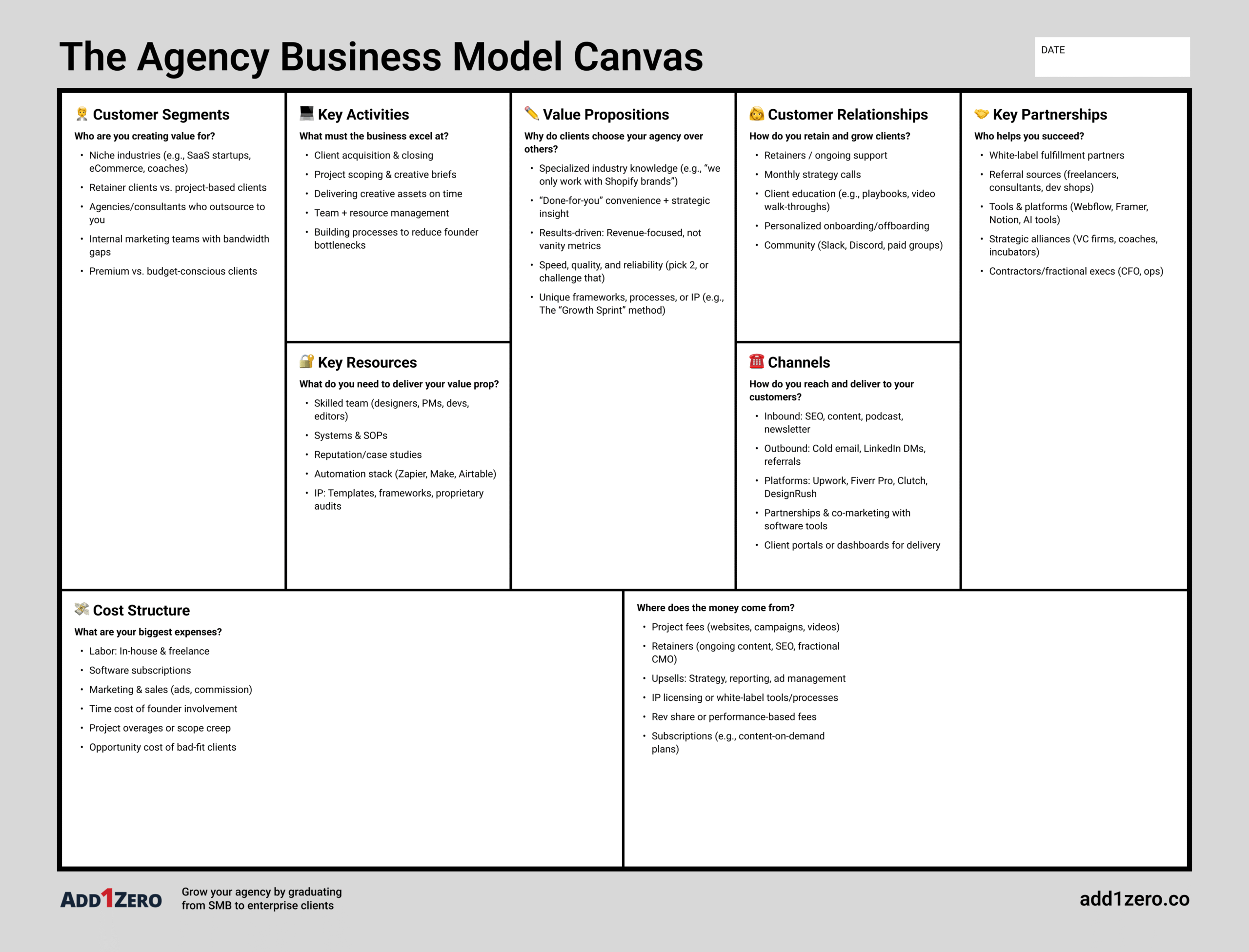
What if the real answer to how to grow a PPC agency isn’t just more of the same clients, but an entirely different caliber? We’re talking enterprise clients. The household names. The kind of logos on your website that make prospects sit up and take notice.
The Enterprise Leap: It’s More Than Just Bigger Ad Spends
Landing that first dream client – a Meta, an AWS, or a Siemens (and yes, we’ve seen agencies we work with close deals exactly like these!) – isn’t merely about proving you can manage larger PPC budgets. It’s about stepping into a completely different arena. Small to medium-sized businesses (SMBs) and enterprise giants? They might as well be operating on different planets. Their internal processes, buying committees, approval chains, and overall expectations are worlds apart from what you’re used to.
This is the chasm where many ambitious PPC agency founders find themselves teetering. They’re brilliant at optimizing campaigns and driving leads for SMBs, but the enterprise playbook? That’s a language they haven’t learned yet. And that’s precisely where the most significant growth opportunities lie hidden.
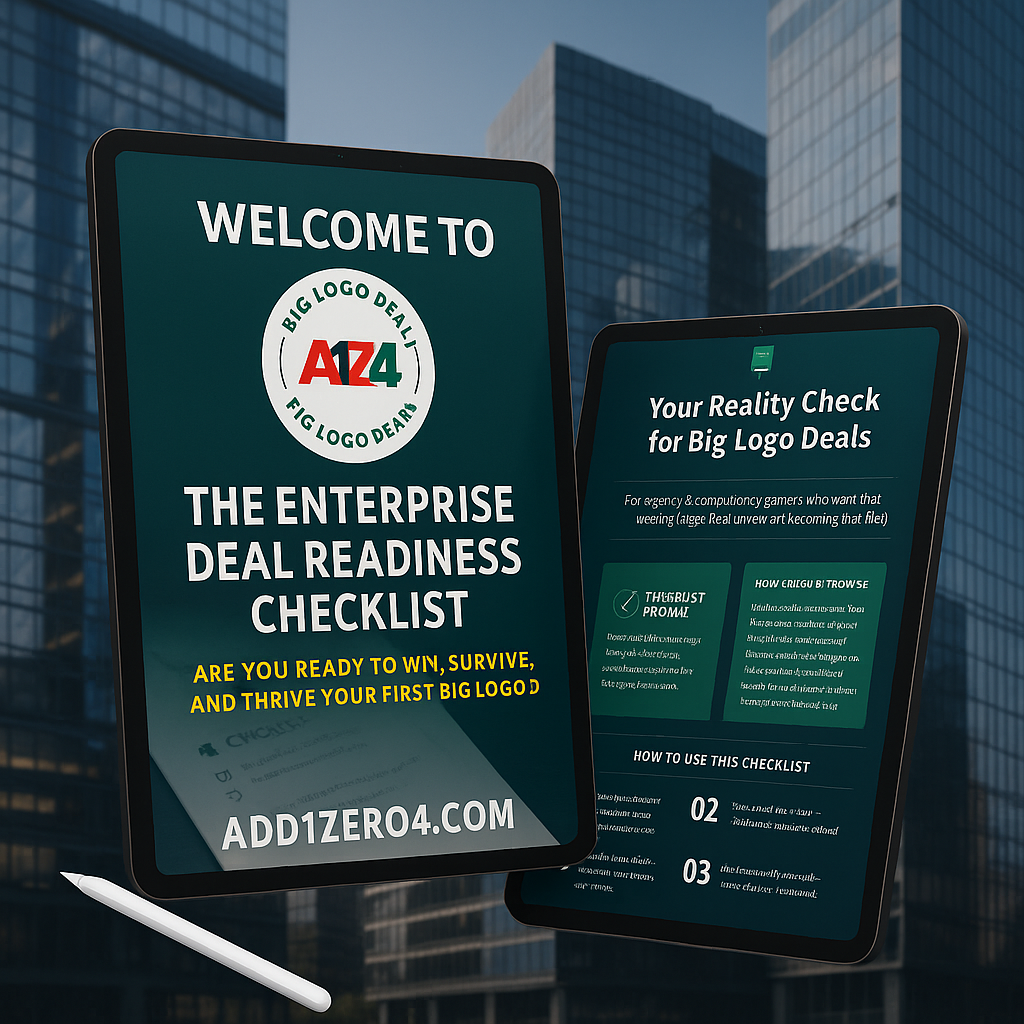
The Enterprise Deal Readiness Checklist
Skip the $100K+ learning curve. This insider’s checklist reveals if your B2B agency can win (and survive) Fortune 500 deals before you risk your stable revenue and best people chasing logos you’re not ready for.
Shifting Your Mindset: From PPC Technician to Enterprise-Level Partner
Remember the story of the SaaS founder who initially quoted $30,000 for a complex project? After a shift in understanding enterprise buyer mandates and expectations – a journey we helped him navigate – that same project was proposed and won for $300,000. That’s the transformative power of speaking the enterprise language. It begins with your mindset.
“Calm Confidence”: Your New Superpower
Enterprise buyers have a sixth sense for desperation. That “little swagger” a CMO once mentioned about a successful sales leader? It wasn’t arrogance. It was Calm Confidence. It’s the quiet assurance that you know your agency’s worth and that you’re not overly thirsty for their business. It’s embodying the sentiment: “It makes no difference to my life if you buy this. It might make a difference to yours if you don’t.” This isn’t just a sales tactic; it’s a core philosophy that underpins successful enterprise engagements.
Does Your Agency “Look Legit”?
That website you’ve neglected because “we get all our business from referrals anyway”? That’s not going to cut it. Enterprise clients will scrutinize your online presence. Your website, your LinkedIn profiles, your case studies – they all need to project absolute credibility and professionalism. Simple and clean is perfectly fine; small-time and shabby is an instant disqualifier. They need to believe you can handle their scale.
Are You Truly Ready for the Big Stage?
Landing an enterprise deal isn’t just about adding another client to your roster. It often means a tenfold increase in the attention, management, communication, and operational rigor required. These can be ‘bet-the-company’ sized deals. If you’re not prepared to deliver at that level, winning the contract could be the worst thing that happens to your agency.
Financial Fortitude: Can Your PPC Agency Afford the Win?
Here’s a hard truth: a massive enterprise contract can bankrupt your agency faster than having no deals at all if your financial house isn’t in impeccable order. The excitement of the win can quickly turn into a cash flow nightmare. This is a core part of enterprise-proofing your agency’s business model.
Cash Flow is More Than King – It’s Your Lifeline
Big companies often have… leisurely payment terms. Net 60 is common, Net 90 isn’t unheard of. This means you’ll be footing the bill for your team’s time, ad spend, and operational costs for months before their first payment clears. Our rule of thumb? You need enough unallocated cash on hand to float at least half the total contract value for six months. Without this buffer, you’re playing with fire.
Know Your Numbers: The Nitty-Gritty of Enterprise COGS
Your current method for estimating Cost of Goods Sold (COGS) for SMB campaigns? It’s probably not granular enough. For enterprise deals, you need crystal clarity on the true cost to deliver every single component of your service. Enterprise clients will want to unbundle your packages and may even dictate pricing on a line-item basis. If you don’t know your COGS precisely, you risk underpricing crucial elements and watching your profit margins vanish.
The Discipline of a “Walk-Away Price”
What’s the absolute minimum gross margin your agency needs to make a deal worthwhile? Is it 45%? 50%? Define it, and stick to it with unwavering discipline. No logo, no matter how prestigious, is worth sacrificing your agency’s financial health. We’ve seen clients walk away from potential $500k deals because the final negotiated price dipped below their pre-determined walk-away point. It stings in the moment, but it’s essential for long-term survival and growth.
Our Probably-Too-Honest Private Podcast
Find out what REALLY happens when agencies land enterprise deals (spoiler warning: one of them lost $100K)
Brought to you by Add1Zero4 and hosted by David “Ledge” Ledgerwood
Operational Overhaul: Gearing Up for the Big Leagues
The well-oiled machine you’ve perfected for servicing SMB clients? Expect enterprise clients to throw a giant wrench into it. Their needs are often bespoke, their internal processes labyrinthine, and their expectations for communication and reporting on a different level.
Speak Their Language (It’s Not Just About PPC Jargon)
They won’t care about your standard monthly PDF performance report if their global team uses a specific Business Intelligence (BI) dashboard that requires weekly CSV uploads in a particular format. You must adapt. We once saw a client have to manually convert a 65-slide presentation into a Word document for a major cloud provider simply because that was leadership’s preferred format. This is the kind of operational overhead you must anticipate.
Sales Enablement That Actually Enables Enterprise Sales
Forget those clunky, oversized “sales decks” crammed with every feature you offer. Enterprise prospects are busy. They want clear, concise information that demonstrates expertise and, crucially, potential ROI. Think modular:
- Clean, simple, short, visual, and low-density.
- Easy to consume: One-page case studies (hosted on a URL, not as a clunky PDF attachment) often get more traction than elaborate brochures.
- Focus on the numbers: Get specific about metrics and ROI, tying it to real dollars wherever possible.
The “Bat Phone”: Managing Your Existing Clients During the Transition
When you finally land that monster enterprise client, your best people will inevitably be stretched thin. Be transparent with your existing SMB clients. Explain that you’ve landed a significant new opportunity and that while you’re scaling, there might be adjustments. Give them a direct escalation path – a “Bat Phone” – if they feel service is dipping. They’ll appreciate the honesty and proactive communication far more than being left in the dark.
Pricing & Packaging: It’s What They Value, Not Just What You Charge
Your standard PPC packages that work so well for SMBs? Enterprise clients will likely want to dissect them, customize them, and understand the “why” behind every single line item. They’re not buying a package; they’re investing in a solution tailored to their massive, complex needs.
Revisit “Twice the Price, Half the Deliverables”
This isn’t about gouging; it’s about reality. Enterprise work involves significantly more overhead: more meetings, more stakeholder management, more intricate reporting, more compliance. Your typical $5,000/month SMB retainer might translate to a $10,000-$15,000/month enterprise engagement that, on paper, includes fewer raw “deliverables” but involves far more strategic depth, integration, and hands-on management.
The End of “Free Favors”
Doing a little something extra for a friendly SMB client often builds goodwill and strengthens the relationship. With enterprise clients, “free work” or out-of-scope efforts often just become the new, unacknowledged baseline expectation. Worse, the person you did the “favor” for might not even be the one who can reciprocate with budget or future opportunities. Document everything. If you make a concession, ensure it’s a strategic trade for tangible value, like a testimonial or a case study.
Navigating the Paperwork Labyrinth: SOWs, POs, and MSAs
Get ready for a whole new world of acronyms and documents. Master Service Agreements (MSAs) can be dauntingly long and filled with dense legalese. Statements of Work (SOWs) will need to be meticulously detailed, and understanding the anatomy of a winning enterprise proposal is non-negotiable. And the Purchase Order (PO)? Often, no PO means no payment. You’ll need robust internal processes to manage this.
The Big Logo Deals Course
Created by experts who have closed over $50 million in revenue over the last decade who teach you everything they know about closing deals with the logos you wish were on your client list.
The Legal & Procurement Gauntlet: Dotting I’s and Crossing T’s
Enterprise contracts and procurement processes can feel like navigating a minefield. While you don’t need to (and likely can’t) redline every clause in their 60-page MSA, you do need to understand the key terms that can impact your agency.
“Can We Use Your Logo?” – The Publicity Clause
After all the blood, sweat, and tears to land a big logo, you’ll want to showcase it. But check the contract! Many enterprise agreements have strict publicity clauses that may prohibit you from using their name or logo in your marketing without explicit written permission. Negotiate this upfront if possible. At the very least, understand the process for requesting permission.
NDAs: Mostly Standard, Occasionally Treacherous
Non-Disclosure Agreements are standard. Most are boilerplate and harmless. However, be vigilant for clauses that sneak in non-competes or exclusivity terms. We once advised a client to walk away from a potentially lucrative deal with the world’s largest healthcare company because their NDA essentially tried to prevent them from working with any other healthcare-related business. That’s not a partnership; it’s a handcuff.
Insurance, IT Audits, and Other Hoops
Expect enterprise clients to have specific insurance requirements (Errors & Omissions, Cyber Liability, etc.). The coverage amounts they initially request might be overkill for an agency of your size; don’t be afraid to discuss and adjust these to reasonable levels. IT security audits can also be part of the onboarding. Leveraging major cloud providers for your data and operations can help here, as they typically have robust, well-documented security postures.
The Art of Patience: Enterprise Time Moves at Its Own Pace
Remember Ledge’s cautionary tale? He got a verbal “yes” for a $40,000 deal, bought champagne for the team, and then… crickets. The deal evaporated. A verbal commitment in the enterprise world, especially from someone not at the top of the food chain, means very little until the contract is signed and the PO is issued. It’s just one of many common mistakes that can sabotage a long B2B sales cycle.
“Constellation Decision-Making”
You’re rarely selling to a single decision-maker. You’re navigating a ‘constellation’ of stakeholders: users, influencers, budget holders, legal, procurement, IT – many of whom you’ll never meet, each with their own priorities and concerns. Learning who’s who in the enterprise sales cycle is a critical skill. This process takes time. A lot of it. Deals that take 6-12 months are not uncommon.
Polite Persistence is Your Friend
If a prospect goes dark for weeks or even months, don’t assume the deal is dead. It’s often just “enterprise time.” Your deal, while critical to you, is one of many things on their plate. Follow up consistently but politely. Add value with each touchpoint. Ask clarifying questions. But also know when to gracefully move on. Not every chase ends in a win.
Ready to Stop Chasing PPC Scraps and Start Landing Enterprise Whales?
Transforming your PPC agency into an enterprise-serving powerhouse is a significant undertaking. It’s a marathon, not a sprint. It demands a fundamental shift in your mindset, operations, financial planning, and sales approach. The question of how to grow a PPC agency beyond a certain point inevitably leads to this enterprise crossroads. Are you prepared to learn an entirely new playbook?
If you’re tired of the SMB retainer grind and truly ready for bigger challenges, more complex (and rewarding) work, and the kind of client logos that open doors, then it’s time to get serious about cracking the enterprise code and mastering the steps of the enterprise sales process.
The Big Logo Deals course is meticulously designed for B2B service agency owners like you – those ready to make the leap from serving small businesses to partnering with global giants.
Wondering if your agency is even close to being ready for this shift? Start by downloading our free Enterprise Deal Readiness Checklist. It’ll give you a clear-eyed view of where you stand.
And for ongoing insights, strategies, and real-world stories from agency owners who’ve made this journey, be sure to tune into the Big Logo Deals podcast.
Stop just dreaming about those game-changing enterprise clients. Start building the agency that can confidently win and thrill them.