
So, your marketing agency is crushing it with small to medium-sized businesses (SMBs). You’ve built a reputation, your team is humming, and clients love the results. But there’s that itch, isn’t there? That voice whispering about bigger challenges, bigger impact, and, let’s be honest, bigger contracts. You’re eyeing those “big logo” clients – the enterprise behemoths, the household names. But how do you grow your marketing agency from an SMB specialist to an enterprise player?
Big Logo Deals
Learn how to close your first big enterprise deal and drive massive business growth.
It’s a common aspiration, and a smart one. Landing just one enterprise client can transform your agency’s trajectory, revenue, and prestige. The catch? What got you here, won’t get you there. Enterprise companies operate on a completely different wavelength than the SMBs you’re used to. They have different structures, buying processes, expectations, and, frankly, a whole different language. Many agencies stumble here, trying to apply SMB tactics to enterprise-sized puzzles, only to find frustration.
If you’re serious about how to grow your marketing agency by landing these giants, it’s time to upgrade your playbook. This isn’t just about scaling your current services; it’s about a fundamental shift in mindset, operations, and strategy.
The Mindset & Deal-Making Metamorphosis
Before you even think about pitching, your agency needs to look, feel, and act like it belongs in the enterprise league.
1. “Looking Legit”: First Impressions Count, Big Time
Remember how you might have let your own website slide a bit because referrals kept rolling in from your SMB network? That won’t fly with enterprise prospects. They will scrutinize your digital presence.
- Website & Marketing: Your site needs to scream professionalism and credibility. Simple is fine, but “under construction” or outdated is a deal-breaker. They need to believe you can handle their multi-million dollar brand.
- Core Values: Those fun, quirky internal core values that make your agency a great place to work? Fantastic. But be mindful of how they’re presented externally. An enterprise buyer looking for a serious partner might raise an eyebrow if “Fun over work!” is plastered on your About Us page.
- Lead Funnels: Aggressive, highly automated funnels that work for SMBs can be an instant turn-off for enterprise contacts. They expect a more consultative, accessible approach. Consider “Appointment-Focused Funnels” that prioritize getting a conversation scheduled.
- Remote Sales Calls: Your video call game needs to be flawless. Think professional background, good lighting, clear audio, and an ability to command the virtual room with confidence, not desperation. Active listening, amplified for video, is key.
2. Cultivating “Calm Confidence”
No one likes a “thirsty” salesperson, especially not sophisticated enterprise buyers. You need to project an aura of “calm confidence.” This isn’t arrogance; it’s the quiet assurance that you’re the best solution to their problem, and you’re there to help them see it, not strong-arm them into a deal. It’s the belief that your agency brings immense value, and while you want their business, you don’t need it to survive. This often means being genuinely prepared to walk away if the terms aren’t right.
3. Understanding the Labyrinthine World of Enterprise Stakeholders
With SMBs, you might deal with 2-3 decision-makers. In the enterprise world, you could be juggling 8-10 (or more!) stakeholders, each with different agendas, influence levels, and titles that can be initially baffling. You’ll encounter the “Delegated Shopper” (often an intern filling a spreadsheet), the “Unfunded Mandate” (a frazzled mid-level manager given a vague task), and hopefully, a “Mid-Level Owner” who can become your internal advocate. Your job is to understand this “constellation” and turn your primary contact into a champion who can navigate their internal complexities with your help.
4. Deal-Making Levers & Developing Thick Skin
Enterprise deals are rarely straightforward.
- Beyond Price: When they ask for a discount (and they will), don’t just cave. Think about other levers: better payment terms for you, a longer commitment from them, a glowing video testimonial, or reduced onerous clauses in their standard contract.
- Budget Cycles & Approvals: Enterprise budgets often don’t follow the calendar year. Ask about their fiscal year and budget submission deadlines. Understanding their approval levels (and whether procurement is a gatekeeper or a facilitator) is crucial.
- Resilience is Key: You’ll get pushed around. You’ll encounter prickly personalities. Don’t take it personally. Focus on collaboration and understanding what motivates each stakeholder.
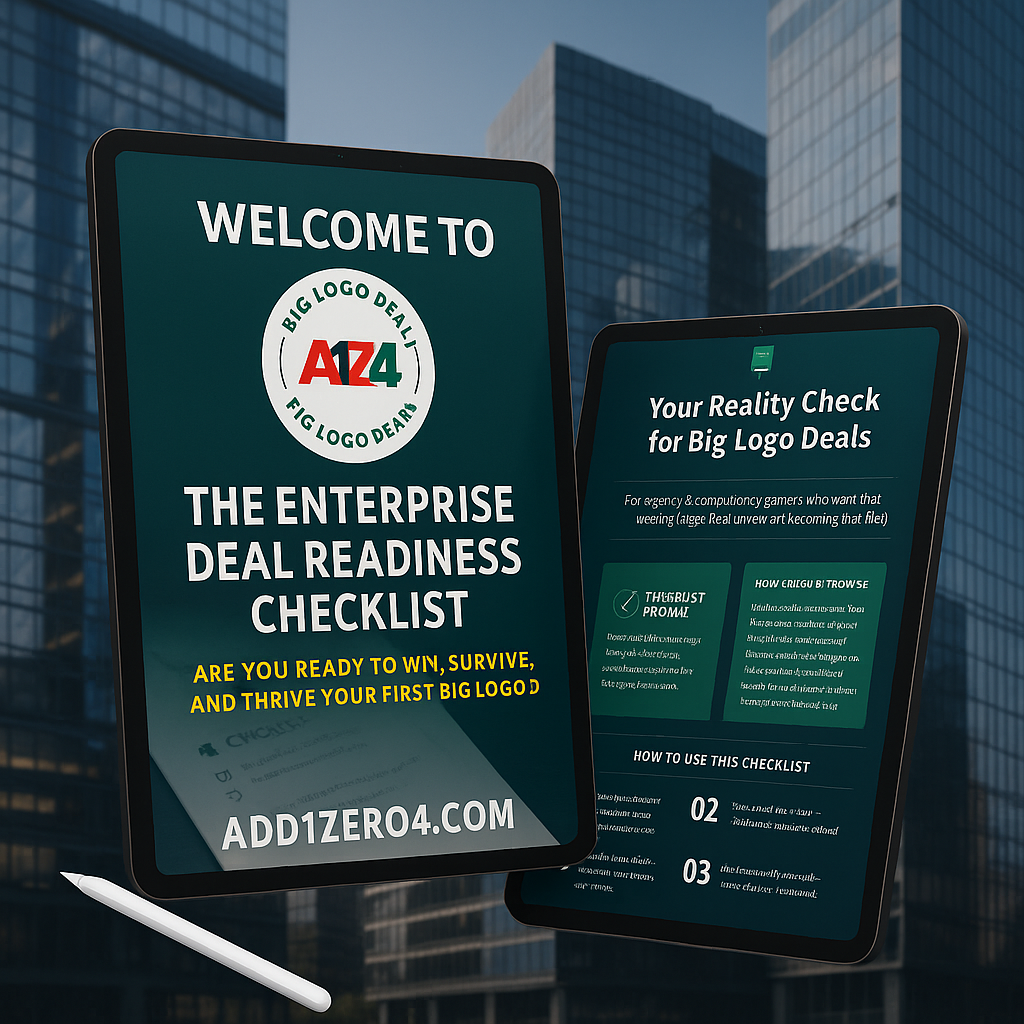
The Enterprise Deal Readiness Checklist
Skip the $100K+ learning curve. This insider’s checklist reveals if your B2B agency can win (and survive) Fortune 500 deals before you risk your stable revenue and best people chasing logos you’re not ready for.
The Financial X-Ray: Are You Truly Ready for the Big Leagues?
Landing a massive deal feels incredible, but it can bankrupt an unprepared agency faster than no deals at all.
1. The Cash Flow Conundrum
Enterprise clients often have long payment cycles (Net 60, Net 90, or worse). This means you’ll be financing the work – paying your team, covering expenses – long before their check clears. A good rule of thumb? Have at least half the contract value for the first six months in unallocated cash before the deal starts. This is your “self-insurance.”
2. Knowing Your Numbers (Really Knowing Them)
- COGS for Services: What does it actually cost you to deliver enterprise-level work? This includes not just salaries, but also overhead, management time, and the inevitable “friction” of dealing with large organizations. Don’t forget to factor in your own time if you’re still involved in delivery.
- Gross Margin & Walk-Away Price: Define your target gross margin and the absolute minimum you’ll accept. Stick to it, no matter how tempting the logo.
- Opportunity Cost: What SMB work or internal projects will you sacrifice to service this enterprise client? What’s the risk to your existing client relationships if your A-team is swamped?
3. Metrics That Matter to Them
Enterprise clients, and especially their bosses, care about hard ROI.
- Beyond Vanity Metrics: Understand what KPIs their leadership uses to measure success. It’s almost always tied to revenue or significant cost savings.
- Testimonial Gold: From day one, track metrics that will build a powerful case study. This will be invaluable for landing your next big logo.
4. Accounts Receivable: A Whole New Ballgame
Chasing payments from enterprises is an art and a science. Their AP departments can be fortresses. Proactive, persistent, and professional follow-up on invoices is non-negotiable.
5. Scaling Up Smartly
Can your current team handle the 10x increase in attention, management, and output an enterprise client demands without burning out or letting SMB work suffer? Are your existing clients healthy, or are you overly reliant on one or two for revenue? Honest answers here are critical.
Our Probably-Too-Honest Private Podcast
Find out what REALLY happens when agencies land enterprise deals (spoiler warning: one of them lost $100K)
Brought to you by Add1Zero4 and hosted by David “Ledge” Ledgerwood
Operational Overhaul: Gearing Up for Prime Time
Your internal processes, honed on SMBs, will likely buckle under enterprise strain.
1. Showing Up as THE Expert
- Deep Dive Research: Enterprise clients expect you to know their business, industry, and challenges before the first call. Surface-level understanding won’t cut it.
- Team-Wide Preparedness: It’s not just the sales lead; everyone on your team who interacts with the client needs to be informed and polished. Record sales calls (with tools like Fathom for Zoom) and make them accessible to the delivery team for onboarding.
- Data Prowess: They’ll expect concrete ROI. Be prepared to research, manipulate, and present data in formats they prefer (which might not be your standard slide deck).
2. Sales Enablement That Speaks Their Language
Forget the flashy, lengthy sales decks. Enterprise buyers want:
- Middle-of-Funnel Gold: Content (think concise one-pagers, short videos, clear flowcharts) that specifically addresses their pain points and demonstrates your unique ROI-driving process.
- Low-Design, High-Impact: Clean, simple, visual, and numbers-focused.
- Modular Library: Build a collection of these focused pieces you can pull from as needed, both during calls and in follow-up emails.
3. Meeting (and Exceeding) Enterprise Customer Standards
- Processes Will Break: Be prepared for custom requests. Your standardized SMB packages are a starting point, not the end-all.
- Communication Overdrive: Progress tracking, reporting, and communication need to be meticulous. Expect roadblocks and be agile. Information design can be a huge asset here, ensuring clarity.
- Handling the Inevitable Strain on SMB Clients: When you land that big logo, your best people will be stretched. Be transparent with your existing SMB clients. Give them a clear escalation path (a “Bat Phone”) if they feel service is slipping.
Pricing & Packaging: It’s Not Just a Bigger SMB Deal
Your SMB pricing model needs a serious enterprise upgrade.
1. Custom, Not Catalog
Large companies rarely buy “off-the-shelf” packages. They expect solutions tailored to their unique, complex needs.
2. “Twice the Price, Half the Deliverables” – Revisited
This isn’t about gouging; it’s about covering the significantly higher overhead. Enterprise clients demand more meetings, more reports, more hand-holding, and navigate slower internal processes. This all costs your agency time and money.
3. No More “Freebies”
Doing a quick “favor” for an SMB client can build goodwill. With enterprises, undocumented free work often just sets an expectation for more free work. If you do offer something extra, document it clearly as a one-time concession and its actual value.
4. Proposals That Close, Not Confuse
- Keep it Simple: We’ve had immense success with straightforward Google Docs proposals that get right to the costing and scope. The sales calls should have already convinced them why you.
- RFPs – Handle With Care: Requests for Proposals can be massive time sinks with low win rates. Only engage if you feel very close to the decision-making process or the opportunity is truly monumental.
- The Paperwork Maze: Prepare for SOWs, POs, vendor portals, and endless forms. Milestone-based billing is common and often preferable to waiting for full post-delivery payment.
Navigating the Legal & Procurement Labyrinth
This is where many promising deals get bogged down.
- Legal Counsel: They’ll use their contract, not yours. Have an experienced legal eye review it, but focus on what actually matters: your IP, your ability to use their logo (that publicity clause is crucial!), and avoiding truly onerous terms. Don’t get bogged down in redlining every minor clause.
- NDAs: Mostly standard, but watch for non-competes or overly broad exclusivity clauses that could hamstring your agency’s future growth.
- Insurance & Audits: They’ll have insurance requirements (get them tailored to what’s relevant for your services – you likely don’t need coverage for automobile usage if you’re a remote agency) and may require data security/IT audits. Cloud-based operations can simplify this.
- Procurement: These are the gatekeepers. Understand their process, provide all requested documentation promptly (W-9s, banking info, company overviews, detailed pricing), and be prepared for some back-and-forth.
The Big Logo Deals Course
Created by experts who have closed over $50 million in revenue over the last decade who teach you everything they know about closing deals with the logos you wish were on your client list.
The Long Game: Patience is a Virtue (and a Strategy)
Enterprise sales cycles are marathons, not sprints.
- “Constellation Decision-Making”: As mentioned, it’s rarely one person signing off. Understand the hierarchy and who really holds the purse strings.
- The Follow-Up Art: Polite persistence is key. Provide value in your follow-ups. Connect on LinkedIn. Use text (judiciously) if you have their mobile. Know when to strategically pause and when to re-engage. And, importantly, know when a deal has truly gone cold and it’s time to move on.
- A “Verbal” Means Almost Nothing: I (Ledge, founder of Add1Zero) learned this the hard way. Early in my career, I got a verbal “yes” on a $40k deal from a VP at a huge firm. I bought champagne for the team. Weeks later: “Sorry, couldn’t get approval.” Don’t celebrate until the contract is signed, the PO is issued, and you know you can bill it. Loose lips (and premature celebrations) sink morale.
Ready to Add That Zero?
Growing your marketing agency by landing enterprise clients is a challenging, multifaceted endeavor. It requires a deep understanding of how these large organizations operate, a willingness to adapt your own agency’s DNA, and a healthy dose of resilience. But the rewards – in terms of revenue, reputation, and the sheer satisfaction of working with iconic brands – are immense.
Ready to stop dreaming about those big logos and start developing the strategies to land them? The Big Logo Deals course provides the comprehensive playbook, distilled from decades of experience closing tens of millions with enterprise giants.
Not quite sure if your agency is truly prepared for the enterprise leap? Download our free Enterprise Deal Readiness Checklist for an honest assessment.
And for ongoing insights and stories from the front lines of enterprise sales, be sure to tune into the Big Logo Deals podcast.
The journey from SMB favorite to enterprise powerhouse is within your reach. It’s time to get ready.