
You’ve built a successful B2B services agency. You’re a star with SMB clients, delivering great work and getting referrals. But then there’s that itch… the desire to land those “big logo” clients. The ones that not only transform your revenue but also catapult your agency’s reputation into a new league. Sounds amazing, right? But if you’ve dipped your toe into the enterprise waters, you’ve probably realized your trusty SMB b2b sales process isn’t just ineffective; it might be actively sabotaging your chances. Enterprise clients aren’t just bigger SMBs; they operate on an entirely different planet, and understanding their world is the first, most crucial step to winning their business.
Big Logo Deals
Learn how to close your first big enterprise deal and drive massive business growth.
Why Your Current B2B Sales Process is Sabotaging Your Enterprise Dreams
Remember how you wooed your SMB clients? A great portfolio, a couple of sharp meetings, maybe a referral from a happy customer, and boom – deal closed. That agility and directness, while a strength in the SMB world, can become a liability when you’re chasing enterprise contracts.
- The SMB vs. Enterprise Chasm:
- Decision-Makers: With SMBs, you’re often talking to the founder or a key decision-maker who can say “yes.” In enterprise, you’re facing a “constellation” of stakeholders – a committee with varied (and sometimes conflicting) agendas. The person you think is the decision-maker might just be an internal advocate with no real budget power.
- Speed: SMB deals can move fast. Enterprise deals? Think glacial. Budget cycles, multiple approval layers, and a general lack of urgency (from their side) mean your sales cycle just got a lot longer.
- Risk Aversion: Big companies are, by nature, more risk-averse. They’re not just buying your service; they’re navigating internal politics and career implications. This means more scrutiny, more due diligence, and a preference for vendors who “look the part.”
- Procurement: For SMBs, procurement might be a handshake or a simple contract. For enterprise, it’s often a formidable fortress, complete with MSAs, vendor portals, and stringent compliance checks.
- The Referral Trap Breaks Down: While referrals are gold for SMBs, they rarely open enterprise doors in the same way. Enterprise clients use different channels to find vendors, and even if you get an intro, you’ll still need to navigate their complex internal buying b2b sales process.
- Looking “Small” is a Big Problem: That scrappy, lean-and-mean vibe that endeared you to startups? It can scream “risk” to a corporate buyer. They need to feel confident you can handle their scale, their demands, and their brand. If your website looks dated or your materials aren’t polished, they’ll pass.
Your old playbook is designed for a different game. To win big logo deals, you need to fundamentally transform your agency’s b2b sales process, starting from the inside out.
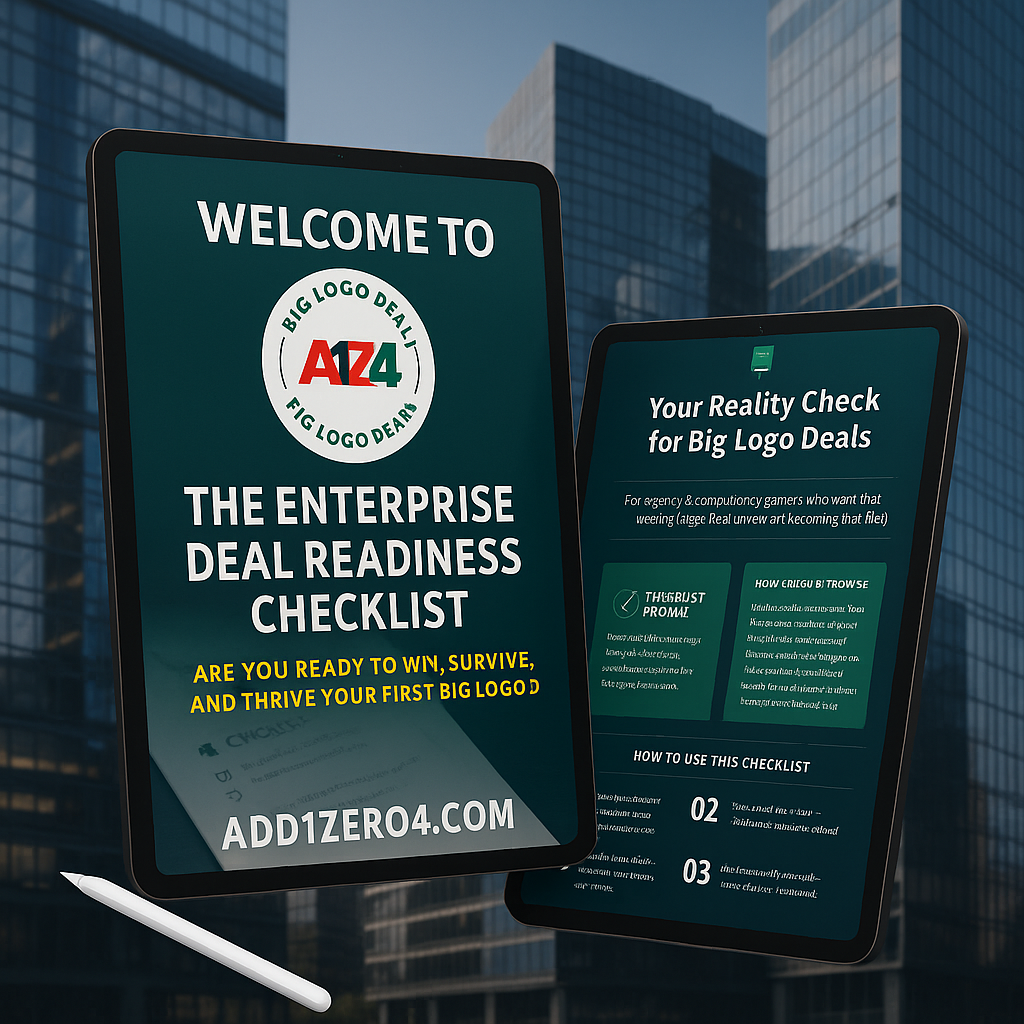
The Enterprise Deal Readiness Checklist
Skip the $100K+ learning curve. This insider’s checklist reveals if your B2B agency can win (and survive) Fortune 500 deals before you risk your stable revenue and best people chasing logos you’re not ready for.
Recalibrating Your Agency for the Enterprise Leap: Transforming Your B2B Sales Process
Landing that first major enterprise client is a game-changer. It’s the catalyst for faster growth and higher margins. But getting there requires a shift in more than just your pitch deck. It demands a deep understanding of how these behemoths operate and a willingness to adapt your entire approach.
1. The Mindset Shift: From Eager Beaver to Calm Confidence
The way you think about selling to enterprise clients is paramount. That hunger and enthusiasm that worked with SMBs can come across as “thirsty” or desperate to a corporate buyer.
- Embrace “Calm Confidence”: This isn’t arrogance; it’s a quiet assurance in your agency’s value. It’s the vibe that says, “We’re the best solution, and you’ll come to understand that, but it makes no difference to my life if you buy this. It might make a difference to yours if you don’t.” This feigned indifference, as counterintuitive as it sounds, removes pressure and positions you as a consultant, not just a vendor.
- Know Your Worth (and Theirs): Enterprise clients expect to pay more, but they also expect more. Understand that they’re not just buying your services; they’re buying risk mitigation, scale, and a partner who understands their complex world.
- Look Legit, Act Legit: Your online presence is your first impression. Is your website polished and up-to-date? Does your LinkedIn profile reflect enterprise-level expertise? Simple is fine, but it must pass the corporate “smell test.” This extends to your communication – ditch the overly casual approach.
- Core Values – A Subtle Alignment: While your agency’s “fun-first” culture is great internally, be mindful of how overtly you promote it externally. Enterprise clients operate under different pressures and might not resonate with values that seem to prioritize play over professional delivery. It’s about finding a balance that feels authentic yet professional.
2. Financial Fortitude: Can You Afford to Win Big?
Winning an enterprise deal can feel like hitting the jackpot. But the financial realities can be a shock if you’re not prepared. That big win can quickly become a “bet-the-company” sized deal that could cripple you.
- The Payment Term Twilight Zone: SMBs might pay upfront or Net 30. Enterprises? Get ready for Net 60, Net 90, or even longer. This means you’ll be delivering work (and paying your team and expenses) long before you see a dime.
- COGS: The Enterprise Edition: Calculating your Cost of Goods Sold for SMB work is one thing. For enterprise, it’s a whole new ballgame. Factor in increased project management, more meetings, higher communication overhead, and potentially more specialized (and expensive) talent. If you don’t know your true COGS for these larger deals, you can’t price effectively or know your walk-away point.
- Cash Flow is King (and Queen, and the Entire Royal Court): You are essentially financing these large deals. Do you have enough cash on hand to float payroll and operating expenses for months while waiting for payment? A good rule of thumb: assume you’ll need to float at least half the contract value for six months. Insufficient cash flow is the fastest way for a dream client to turn into a nightmare.
- Are You Really Ready? Before you even think about pitching a massive deal, assess your financial health. Are your current accounts receivable (AR) in good shape? Do you have a healthy balance sheet? The Enterprise Deal Readiness Checklist can help you spot critical gaps before they become disasters.
Our Probably-Too-Honest Private Podcast
Find out what REALLY happens when agencies land enterprise deals (spoiler warning: one of them lost $100K)
Brought to you by Add1Zero4 and hosted by David “Ledge” Ledgerwood
3. Operational Overhaul: Delivering at Enterprise Scale
The well-oiled machine you’ve built for SMB clients? Expect enterprise clients to throw a wrench in it. Their demands, processes, and expectations will stretch your operations in ways you haven’t anticipated.
- Brace for Broken Processes: What works for SMBs often doesn’t scale or translate to enterprise needs. They won’t want your standard packages; they’ll want customized solutions and will expect you to adapt to their way of working.
- Elevated Expectations: Enterprise clients demand a higher level of communication, more detailed reporting, and rigorous project management. You’ll need robust systems to track progress, manage stakeholders, and provide the transparency they expect.
- The “Twice the Price, Half the Deliverables” Reality: This isn’t just about pricing; it’s about operational capacity. Enterprise deals involve significant overhead – more meetings, more revisions, more internal hoops to jump through on their end (and yours). This unseen work needs to be factored into your scope and pricing.
- Team Readiness and Expertise: Can your current team handle the intensity and complexity of an enterprise account? You might need team members with specific experience working with large companies, or you may need to hire or contract specialists. Don’t underestimate the learning curve.
- Managing Inevitable Scope Creep: It’s not a matter of if, but when. Enterprise clients will ask for more. You need clear SOWs and a polite but firm process for addressing requests that fall outside the agreed-upon scope. “Favors” don’t build the same equity as they do with SMBs; they just set new, unpaid expectations.
4. Navigating the Labyrinth: Procurement, Legal, and Decision-Making
Welcome to the often-bewildering world of enterprise bureaucracy. This is where many promising deals stall or die.
- The Procurement Puzzle: This department isn’t there to make your life easy. Their job is to mitigate risk, ensure compliance, and often, drive down costs. You’ll likely need to register on vendor portals, fill out endless forms, and prove you meet their standards.
- The Alphabet Soup of Contracts: MSAs (Master Service Agreements), SOWs (Statements of Work), POs (Purchase Orders) – get familiar with these terms. Enterprise clients will almost always use their paper, which can be lengthy and complex. While you might not be able to change much, understanding what you’re signing is critical.
- NDAs: Read the Fine Print: Non-Disclosure Agreements are standard. Most are harmless, mutual agreements to protect confidential information. But watch out for sneaky clauses like non-competes or overly broad exclusivity terms that could limit your agency’s future business.
- Insurance & Data Security Audits: Be prepared for stringent requirements. They’ll want to see proof of adequate insurance (Professional Liability/E&O is common, but they might ask for more). They may also conduct IT and data security audits. Using major cloud providers can help, as they often have robust security certifications.
- “Constellation Decision-Making”: You’re rarely selling to just one person. Decisions are often made by a committee of stakeholders, each with their own priorities and influence. Identifying the real decision-makers and understanding their internal dynamics is key. The person championing your cause internally might have no actual budget authority.
- The Long Game: Patience and Persistence: Enterprise sales cycles are marathons, not sprints. Budget cycles, internal reorganizations, and shifting priorities can cause delays. Polite, value-added follow-up is essential. Understand their fiscal year and when budget decisions are made. Don’t mistake a “verbal yes” from an enthusiastic manager for a done deal.
The Big Logo Deals Course
Created by experts who have closed over $50 million in revenue over the last decade who teach you everything they know about closing deals with the logos you wish were on your client list.
5. Pricing and Packaging for the Big Leagues
Your carefully crafted SMB packages? They’re probably not going to cut it. Enterprise clients expect tailored solutions.
- Customization is King: Forget one-size-fits-all. Large companies want to feel their unique (and often complex) needs are being addressed specifically. This means more discovery, more strategic thinking upfront, and proposals built from the ground up.
- The “Twice the Price, Half the Deliverables” Principle (Again): This isn’t just about covering overhead; it’s about value. Enterprise clients are less price-sensitive than SMBs if they perceive high value and low risk. Your pricing should reflect the strategic importance and complexity of the work.
- Proposals: Substance Over Style: Forget flashy, 50-page pitch decks. Enterprise buyers, especially those in procurement and finance, want to see the essentials: what you’ll do, how you’ll do it, what it will cost, and what the expected ROI is. We’ve found simple, clear Google Docs often outperform elaborate presentations. Get to the point; they’ll scroll to the pricing page anyway.
- No More “Freebies”: Doing a little extra for an SMB client can build goodwill. With enterprise clients, “free work” often goes unnoticed by the actual decision-makers or simply becomes an expected part of your service, eroding your margins. If you do offer something extra, document it clearly as a one-time value-add with its actual cost.
- Negotiate Payment Terms: Don’t just accept their standard Net 90 terms. Try to negotiate for shorter terms, milestone payments, or an upfront percentage to help with your cash flow. If you don’t ask, you don’t get.
The Path Forward: From Frustration to Fortune
Transitioning your agency to successfully serve enterprise clients is a significant undertaking. It requires a fundamental shift in your b2b sales process, your operations, your financials, and your mindset. It’s not just about learning new tactics; it’s about understanding a completely different business culture.
The journey can be challenging, filled with new jargon, complex processes, and moments of “hurry up and wait.” But the rewards are transformative: higher-value contracts, more stable revenue streams, enhanced industry credibility, and the immense satisfaction of seeing your agency’s work impact major brands.
The key is to stop guessing and start understanding. When you grasp why enterprise clients operate the way they do, you can adapt your b2b sales process to meet them where they are, speak their language, and ultimately, win their trust and their business.
Ready to stop spinning your wheels and start strategically pursuing those big logo deals? The Big Logo Deals course is designed by agency veterans who’ve been in your shoes and provides the comprehensive roadmap you need to navigate the enterprise landscape with confidence.
Want to keep learning and get insights on the go? Tune into the Big Logo Deals podcast for actionable advice and interviews with experts.
And if you’re wondering just how prepared (or unprepared) your agency is for this leap, start by downloading our free Enterprise Deal Readiness Checklist. It’s a no-nonsense way to identify your blind spots before they cost you a major opportunity. Your journey to landing bigger clients starts now.